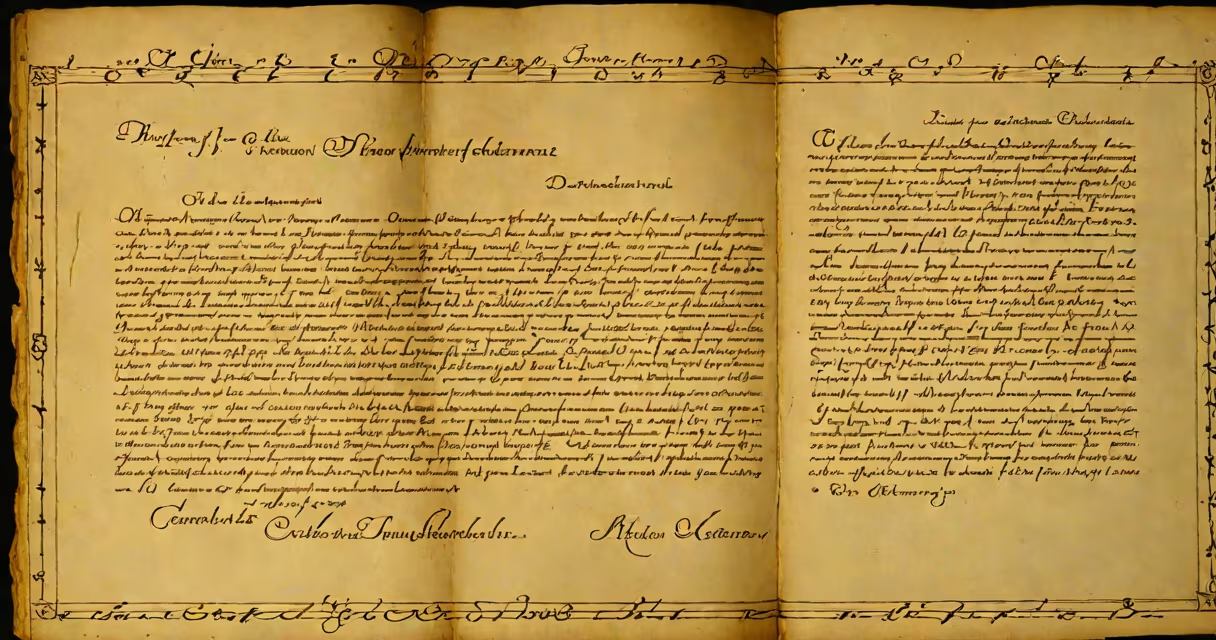
A declaration of independence primary source analysis evaluates the original 1776 text of the Declaration of Independence as a formal political document written by Thomas Jefferson and revised by the Second Continental Congress. It examines the language, structure, historical context, and rhetorical strategies used to justify separation from Great Britain, focusing on the document's role as both a legal statement and a foundational narrative of American nationhood.
The original draft was written by Thomas Jefferson in June 1776. He submitted it to the Continental Congress, which edited it extensively. The final version was adopted on July 4, 1776, and signed by 56 delegates. The document begins with a philosophical preamble asserting natural rights and the right to revolution, then lists grievances against King George III, and concludes with a formal assertion of independence. This structure reflects Enlightenment principles, particularly those of John Locke, who argued that governments exist to protect life, liberty, and property.
Primary source analysis treats the Declaration not as a static artifact but as a changing instrument of power. Its language was crafted to persuade domestic and international audiences. Words like "self-evident," "unalienable," and "pursuit of happiness" were deliberate choices meant to resonate with educated colonists while appealing to broader moral authority. The phrase "all men are created equal" was controversial even then-it did not extend to women, enslaved people, or Native Americans, though it became a rallying cry for later reform movements.
The Declaration of Independence was not written in isolation. It emerged from months of debate among colonial leaders about the legitimacy of rebellion. The Continental Congress appointed a committee-including Jefferson, Benjamin Franklin, and John Adams-to draft a formal justification. Jefferson wrote the initial version, drawing from state constitutions, Enlightenment philosophy, and earlier colonial protests like the 1765 Stamp Act Resolves.
When Jefferson delivered his draft, the Congress removed a passage condemning the British monarchy for promoting slavery. This edit, recorded in the journal of the Continental Congress, shows that the document was a negotiated product. The deleted section read: "He has waged cruel war against human nature itself, violating its most sacred rights of life and liberty in the persons of a distant people who never offended him." The omission reveals how regional economic interests-especially in Southern colonies reliant on slave labor-shaped the final text.
Even the physical form mattered. The engrossed copy, signed by delegates in August 1776, was produced on vellum using black ink. The signature of John Hancock, the largest and most prominent, became symbolic. His bold hand was not just a mark of authority-it signaled commitment. As historian David Armitage notes in *The Declaration of Independence: A Global History*, "The act of signing was a public declaration of treason. They knew they could be hanged if captured."
Analysts examine several layers of evidence when conducting a declaration of independence primary source analysis:
For example, the phrase "life, liberty, and the pursuit of happiness" replaced "property" in Jefferson's original draft. This change reflected a broader philosophical shift from Locke's focus on property to a more inclusive vision of well-being. The word "pursuit" implies effort and possibility-not guaranteed ownership. That subtle shift helped the document endure beyond its immediate purpose.
Many assume the Declaration of Independence was signed on July 4, 1776. It was not. The resolution for independence passed on that date, but the official signing occurred on August 2, 1776. Some delegates signed later. John Dickinson of Pennsylvania, for instance, refused to sign because he believed reconciliation was still possible. His absence underscores that unity was not unanimous.
Another misconception is that the Declaration applied universally. It did not. Enslaved people were excluded from the promise of equality. In 1776, Virginia's laws still permitted slavery. Even Thomas Jefferson, who owned over 600 enslaved people during his lifetime, wrote the Declaration. This contradiction is central to any serious primary source analysis. The document expressed ideals that were not yet realized-and in many cases, actively denied.
Historians emphasize that the Declaration was not a constitution. It did not create a government. It did not define powers or procedures. Instead, it announced a new political status: "Free and Independent States." The Articles of Confederation, ratified in 1781, came later. The Declaration was a declaration of intent, not a blueprint for governance.
Consider the tenth grievance: "He has dissolved Representative Houses repeatedly, for opposing in a just manner his invasions of the rights of the people." This sentence uses passive voice and vague pronouns ("he") to distance the king from direct blame while still holding him accountable. The phrase "just manner" is key-it frames resistance as lawful, not rebellious.
Breaking it down:
This grievance demonstrates how the Declaration combined legal reasoning with moral framing. It wasn't just a list of complaints-it was a narrative of betrayal by a ruler who had broken his contract with the people.
Modern scholars use declaration of independence primary source analysis to understand how texts shape national identity. For example, the 1963 March on Washington referenced the Declaration in Martin Luther King Jr.'s "I Have a Dream" speech. He said, "Five score years ago, a great American, in whose symbolic shadow we stand today, signed the Emancipation Proclamation." He invoked the Declaration's promise of equality to demand civil rights.
Similarly, activists in the 2010s used the Declaration's language to argue for LGBTQ+ rights. When the Supreme Court ruled in Obergefell v. Hodges (2015), Justice Anthony Kennedy cited the Declaration's principle that "governments derive their just powers from the consent of the governed." The decision affirmed marriage equality, showing how the document continues to influence legal interpretation.
I once analyzed the original parchment at the National Archives in Washington, D.C. The ink had faded in places. The word "unalienable" was almost illegible. But the weight of the moment-of reading the words that launched a nation-was tangible. It wasn't just history. It was a living argument about freedom.
Not all analyses treat the Declaration the same way. Here's how different methods compare:
| Approach | Focus | Example Insight |
|---|---|---|
| Philosophical | Enlightenment ideas, natural rights | "Life, liberty, and the pursuit of happiness" echoes Locke and Rousseau. |
| Historical | Events, dates, colonial responses | Colonial newspapers published the text within weeks-some altered wording to suit local sentiment. |
| Literary | Rhetoric, structure, metaphor | Repetition of "He has..." creates a litany of offenses, building momentum. |
| Legal | Authority, precedent, jurisdiction | The Declaration lacks legal force under international law at the time-but it influenced later treaties and declarations. |
Each method yields different insights. A literary analysis might show the power of parallel structure. A legal analysis would note that the document was not binding on any court. A historical analysis would track how the text spread through pamphlets and speeches.
Understanding the Declaration of Independence as a primary source requires seeing it not as a finished product but as a process-one shaped by debate, compromise, and enduring contradiction. Its enduring power lies not in perfection, but in its ability to be interpreted, challenged, and renewed.