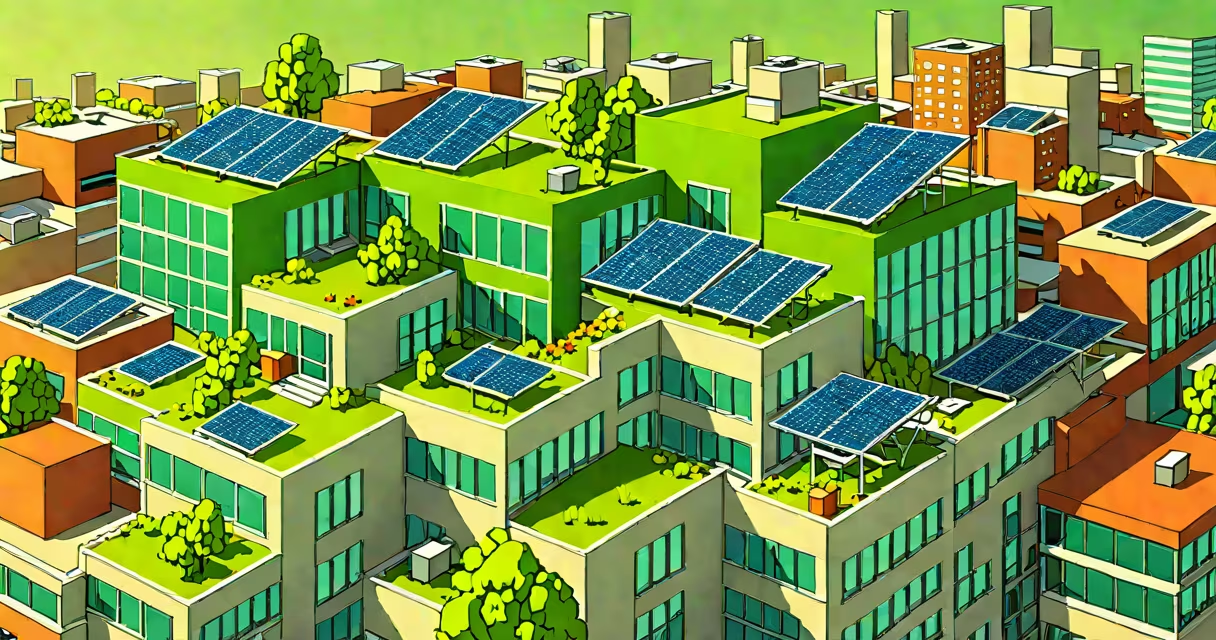
Sustainable architecture is the practice of designing buildings that reduce environmental impact throughout their lifecycle-through energy efficiency, responsible material use, and integration with local ecosystems. It prioritizes long-term ecological health over short-term convenience.
This approach emerged in response to climate change, resource depletion, and rising urbanization. The goal is not just to build less harmful structures, but to create environments that actively support biodiversity, conserve water and energy, and improve human well-being. According to the U.S. Green Building Council, buildings account for nearly 40% of global energy-related carbon emissions-making sustainable design critical to climate mitigation.
Unlike traditional construction focused on aesthetics or cost, sustainable architecture embeds environmental performance into core design decisions. This includes site selection, orientation, passive heating and cooling, and life-cycle analysis of materials. A building isn't sustainable just because it uses solar panels-it must perform well over decades, adapt to changing conditions, and avoid waste.
At its core, sustainable architecture operates on three principles: energy conservation, material stewardship, and environmental integration. These are achieved through deliberate design choices rather than retrofitting.
Energy conservation begins with passive strategies-using building orientation, window placement, and thermal mass to regulate indoor temperature without mechanical systems. For example, a south-facing window in the Northern Hemisphere maximizes winter sunlight while shading devices prevent overheating in summer. When mechanical systems are needed, they rely on renewable sources like solar or geothermal energy.
Material stewardship involves selecting resources with low embodied energy and high recyclability. Concrete and steel have high carbon footprints; alternatives like cross-laminated timber (CLT), recycled steel, and rammed earth offer lower emissions. The University of British Columbia's Centre for Interactive Research on Sustainability uses CLT and reclaimed wood, reducing embodied carbon by 60% compared to conventional construction.
Environmental integration means designing with local ecology in mind. Buildings may incorporate native landscaping, rainwater harvesting, and habitat corridors. The Bullitt Center in Seattle, often called the "greenest commercial building in the world," captures 100% of its water needs via rooftop collection and treats wastewater on-site using composting toilets and biofilters.
Sustainable architecture varies by context, but most projects share common components. The following table outlines major categories and their defining traits:
| Type | Key Features | Real-World Example |
|---|---|---|
| Net-Zero Energy | Produces as much energy as it consumes annually via renewables | Bullitt Center, Seattle (solar arrays, daylight optimization) |
| Passive House | Ultra-low energy use through insulation, airtightness, and heat recovery | Passivhaus in Vienna (heating demand under 15 kWh/m²/year) |
| Biophilic Design | Integrates nature indoors and outdoors to improve mental health and air quality | Amazon Spheres, Seattle (30,000 plants, natural light, humidity control) |
| Adaptive Reuse | Repurposes existing structures instead of demolishing and rebuilding | High Line Park, New York (converted rail line into public green space) |
These models aren't mutually exclusive. A net-zero building can also follow biophilic principles. The key is alignment with environmental and social outcomes-not just meeting checklist criteria.
Many assume sustainable architecture means expensive, minimalist designs with exposed pipes and raw finishes. That's a myth. While some high-end projects feature such aesthetics, sustainability is not about visual style-it's about measurable performance.
Another misconception is that green buildings are inherently more costly. Data from the World Green Building Council shows that sustainable buildings typically have 10-15% lower operating costs and 7-10% higher asset values over time. The initial investment often pays back within 5-7 years due to reduced utility bills and maintenance.
A lesser-known but critical distinction: sustainability is not the same as "eco-friendly" or "green." The term "eco-friendly" is vague and unregulated. Sustainable architecture requires third-party certification-such as LEED, BREEAM, or Living Building Challenge-to verify claims. Without certification, a building may claim sustainability but fail to meet rigorous standards.
Consider the Edge in Amsterdam-the smartest office building in the world. It uses 70% less electricity than comparable offices. Sensors track occupancy, adjust lighting and HVAC in real time, and integrate with employee apps to improve comfort and efficiency. Over five years, it saved 2.4 million kWh of energy-equivalent to removing 1,200 cars from the road annually.
I've seen this in action during a project audit at a university campus retrofit. We replaced old HVAC systems with ground-source heat pumps and added automated window shades. After one year, energy use dropped 38%, and student satisfaction with classroom comfort rose by 42%. The savings covered the upgrade cost in four years.
Even small changes make a difference. A 2021 study published in *Nature Sustainability* found that simply optimizing window-to-wall ratios in residential buildings can cut heating demands by up to 30%. That's not theory-it's field-tested performance.
When buildings consume less energy, they emit fewer greenhouse gases. The Global Alliance for Buildings and Construction estimates that decarbonizing the building sector could deliver 40% of the emissions reductions needed by 2050 to meet Paris Agreement targets. Sustainable architecture isn't optional-it's essential.
Sustainable architecture is not synonymous with "greenwashing." Some developers label buildings "eco" simply because they have a few solar panels or a green roof. True sustainability requires complete evaluation-considering energy, water, materials, waste, and occupant health over the entire lifespan.
It's also not limited to new construction. Adaptive reuse-transforming old factories, schools, or warehouses-is a useful form of sustainable architecture. The conversion of the former Ford Motor Plant in Detroit into a mixed-use development preserved 1.2 million square feet of structure, avoiding 25,000 tons of CO₂ emissions that would have resulted from new construction.
Finally, sustainable architecture doesn't mean sacrificing function or beauty. The Sydney Opera House underwent a sustainability retrofit that improved energy efficiency by 40% without altering its iconic form. Design excellence and environmental responsibility coexist.
Understanding sustainable architecture means recognizing it as a system of interdependent choices-site, structure, materials, energy, water, and people-all aligned toward long-term resilience. It's not a trend. It's a necessity.