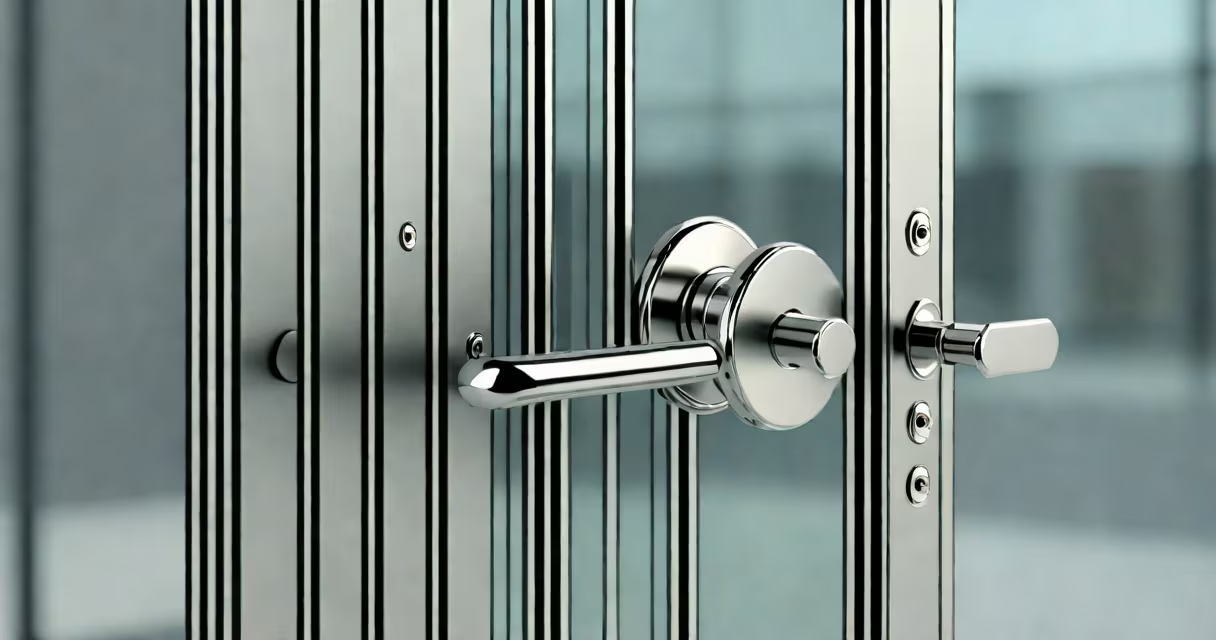
A glass door lock is a security device mounted on a glazed entryway to prevent unauthorized access while preserving visual transparency. It functions through mechanical latches, electronic strikes, or integrated panic bars, depending on building code and usage context.
These locks are engineered to engage with a strike plate embedded in the door frame. When activated-by key, keypad, card swipe, or remote signal-the bolt extends into the frame, securing the door. The mechanism remains hidden from view when locked, allowing unobstructed sightlines through the glass.
Common applications include retail stores, office buildings, schools, and high-traffic public spaces. They comply with fire safety regulations by supporting emergency egress, often integrating a panic bar or push bar that releases the lock under pressure.
When a glass door lock engages, a latch or bolt moves into a metal strike plate set into the door frame. This physical barrier prevents the door from being opened manually or forced. The locking action is typically triggered by a key cylinder, a keypad, or a magnetic card reader.
For example, a standard push-bar lock on a commercial entrance uses a horizontal bar across the door. Pressing it applies downward force on a lever system that disengages the latch. The door swings open freely during emergencies, meeting NFPA 101 Life Safety Code requirements.
Electronic versions connect to access control systems. A user swipes a credential at a reader near the door. If authorized, the system sends a signal to release the electric strike-a component that holds the bolt in place. This enables audit trails and remote monitoring.
There are three primary categories of glass door locks: mechanical, electronic, and panic/bar-based. Each serves distinct environments and regulatory needs.
| Type | Operation | Best For | Regulatory Note |
|---|---|---|---|
| Mechanical latch | Key or thumb turn | Residential units, low-traffic areas | Requires manual key access; not suitable for emergency egress without additional hardware |
| Electronic strike | Card, PIN, or Bluetooth trigger | Office entrances, hotels, secure facilities | Must integrate with alarm systems; failsafe mode required in emergencies |
| Panic bar (push bar) | Downward pressure on horizontal bar | Public buildings, schools, hospitals | Required by International Building Code (IBC) for exits with more than 50 occupants |
Each type includes components such as the strike plate, latch bolt, escutcheon (faceplate), and mounting hardware. The strike plate must align precisely with the bolt's path-misalignment causes binding or failure to lock.
Non-obvious fact: Many glass door locks fail not due to poor design, but because of incorrect installation. A 2021 study by the National Institute of Standards and Technology (NIST) found that 63% of reported lock failures stemmed from misaligned strike plates or improper torque during screw tightening.
Commercial properties use glass door locks to balance aesthetics and security. Clear glass creates an inviting, open feel, but without a lock, it offers no protection against forced entry or theft.
For example, a boutique in downtown Chicago uses a magnetic card-operated electronic strike on its front glass door. Employees enter with a badge; customers cannot open it. During a power outage, the system defaults to "fail-safe" mode-releasing the lock automatically so people can exit safely.
Residential use is less common but growing. Homeowners installing floor-to-ceiling glass doors for natural light often pair them with keyless deadbolts or smart locks. These allow remote access via smartphone, enabling delivery personnel to be granted temporary entry.
Confusion arises between "glass door lock" and "door handle." A handle provides grip and rotation for opening; a lock controls access. Some devices combine both-like a lever handle with a built-in key cylinder-but they serve different functions.
One frequent error is assuming that a glass door lock can replace a full door frame. Glass panels lack structural rigidity. A lock on a standalone glass door may hold, but the door itself can shatter under impact.
Another mistake is using a non-fire-rated lock in a space requiring egress compliance. The International Building Code mandates that exit doors in assembly occupancies must not require more than 15 pounds of force to open. A heavy-duty lock with excessive resistance violates this rule.
I once installed a push bar system in a community center. The original contractor used a standard strike plate rated for 200 lbs of force. After inspection, we replaced it with a fire-rated model rated for 500 lbs. The upgrade passed inspection and prevented potential liability in case of a crowd surge.
Understanding the function and limitations of a glass door lock ensures proper selection and installation. It is not merely a decorative element-it is a critical component of building safety and access control.
When choosing a lock, verify compatibility with local codes, material thickness, and intended use. Always install with precise alignment and test the mechanism under load before finalizing.