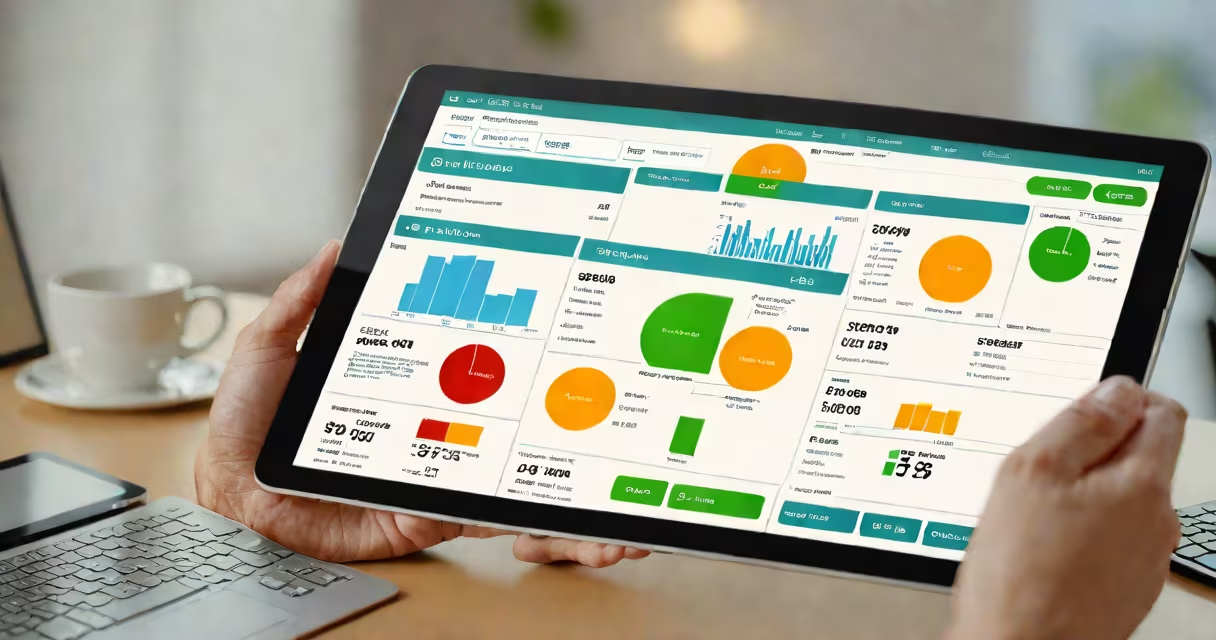
Home financial software is a digital tool designed to track income, expenses, debts, and savings for individuals or families managing household finances. It consolidates financial data from bank accounts, credit cards, and investment portfolios into a single interface, enabling users to monitor cash flow, set budgets, and plan for goals like vacations or retirement.
These tools run on desktops, smartphones, or web browsers. They automatically import transactions via secure connections to banks and financial institutions. Users can categorize spending, view spending patterns over time, and receive alerts when they exceed budget limits. The core function is simplifying financial oversight for non-experts who lack formal accounting training.
Home financial software connects to your bank and credit card accounts using secure APIs such as Plaid or Finicity. Once authorized, the software pulls transaction data daily or hourly, depending on settings. This eliminates manual entry and reduces errors common in spreadsheets.
Transactions are sorted into categories-groceries, utilities, entertainment-based on merchant name and user-defined rules. For example, a purchase at Whole Foods gets tagged as "food" automatically. Users can override defaults to correct misclassifications.
The system generates reports like monthly spending summaries, net worth statements, and progress toward savings targets. Some tools use machine learning to predict future spending based on past behavior. If you spend $300 on dining out each month, the software may flag a projected overspend in the next quarter.
Not all home financial software offers the same functionality. The most effective tools combine automation, visualization, and goal-setting. Here's how they differ:
| Type | Best for | Key Features | Example Tools |
|---|---|---|---|
| Budget-focused | Monthly spending control | Zero-based budgeting, envelope system, spending alerts | YNAB, PocketGuard |
| Net worth trackers | Long-term wealth monitoring | Asset/liability aggregation, net worth trend graphs | MoneyWiz, Personal Capital |
| Debt payoff planners | Payoff strategies | Debt snowball/snowflake calculators, interest rate comparisons | Undebt.it, Debt Payoff Planner |
| Full financial hubs | All-in-one management | Bill reminders, tax prep support, investment tracking | Quicken, Mint (discontinued, but alternatives exist) |
Free versions often limit syncing to a few accounts and lack advanced reporting. Paid plans typically offer unlimited account linking, priority customer support, and integration with tax software like TurboTax. Some charge per device; others offer family sharing.
Many assume home financial software replaces professional advice. That's incorrect. These tools don't interpret market trends, advise on insurance, or handle complex estate planning. They're decision aids-not replacements for financial counselors.
A frequent error is assuming automatic syncs are always accurate. In practice, some transactions take 24-48 hours to appear. Others fail to import due to bank API changes or formatting mismatches. I once had a recurring utility payment not show up for three days-until I manually checked the bank's website.
Another misunderstanding: that all home financial software is secure. While most use encryption and OAuth authentication, users still risk exposure if they reuse passwords or enable auto-login on shared devices. The Federal Trade Commission warns against storing login credentials in browser autofill, especially on public computers.
Consider a two-income household with $6,500 monthly gross income. They use YNAB to allocate funds across categories: $1,200 for housing, $400 for groceries, $300 for transportation, $200 for entertainment, and $1,000 for savings. The software flags a $250 restaurant bill as exceeding the monthly entertainment budget.
Over six months, the couple notices a pattern: dining out costs average $500/month. They adjust their budget to $300 and set a new goal: cut back by $200/month. The software tracks progress and sends a reminder when they hit 75% of the target.
After nine months, they've saved $1,800 toward a vacation fund. The software shows a 32% increase in savings efficiency compared to their previous spreadsheet method. This outcome reflects a documented improvement: a 2022 study by the National Bureau of Economic Research found that users of automated budgeting tools increased their emergency savings by 28% over 12 months.
Home financial software is not enterprise-grade accounting software. It doesn't generate auditable financial statements, track depreciation, or comply with GAAP (Generally Accepted Accounting Principles). Tools like QuickBooks or NetSuite serve businesses with revenue streams, employees, and regulatory filings-functions beyond the scope of household management.
It also isn't a substitute for financial literacy. A user can enter every transaction correctly but still overspend if they don't understand compound interest or inflation's impact on savings. According to the Financial Industry Regulatory Authority (FINRA), 64% of Americans can't pass a basic financial literacy test. Software helps, but education remains essential.
Finally, home financial software doesn't guarantee better outcomes. It only provides data and structure. Success depends on consistent use, regular review, and willingness to adjust habits. A 2021 survey by Pew Research Center found that 41% of users stopped using their financial app within six months due to complexity or lack of perceived benefit.
Home financial software is a practical tool for organizing household money. It turns scattered receipts, bank statements, and mental notes into a clear picture of financial health. When used consistently, it supports informed decisions about spending, saving, and investing.