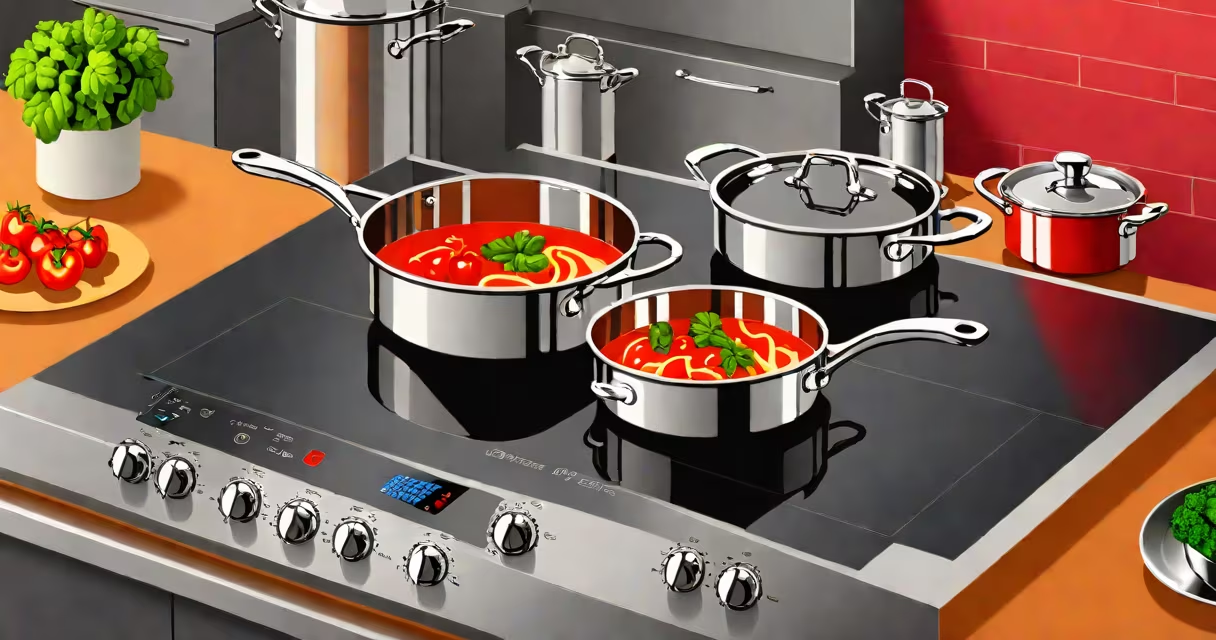
An induction cooktop uses electromagnetic fields to heat cookware directly, not the stovetop surface. It turns on instantly, heats food faster than gas or electric, and shuts off automatically when cookware is removed. This method is more energy-efficient and safer than traditional heating methods.
Induction works by generating a magnetic field through a copper coil beneath the ceramic surface. When ferromagnetic cookware-like cast iron or stainless steel with a magnetic base-is placed on the surface, eddy currents form inside the metal, producing heat. The cooktop itself stays cool to the touch except where the pan contacts it.
Unlike gas or electric stoves, which heat the surface first and transfer energy slowly, induction delivers heat directly to the pot. This reduces energy waste and cuts cooking time. A 10-inch saucepan can boil water in under 2 minutes on high setting, compared to 3-4 minutes on electric or gas.
Induction relies on electromagnetic induction, a principle discovered by Michael Faraday in 1831. Modern cooktops apply this by sending alternating current through a coiled wire beneath the glass surface. This creates a rapidly shifting magnetic field.
The field induces circular electrical currents-called eddy currents-in any conductive material placed above it. These currents flow through the resistance of the metal, generating heat. Only the cookware heats up; the surface remains cool unless touched by a hot pan.
For this to work, the cookware must contain iron or another ferromagnetic material. Aluminum, copper, and glass won't respond. Check the bottom of your pots: if a magnet sticks, it will work on induction. Most modern stainless steel and enameled cast iron meet this requirement.
There are two main types: built-in and portable. Built-in models integrate into cabinetry and offer consistent power output and precise controls. Portable units sit on countertops and are ideal for small kitchens or renters.
| Type | Power Range | Best For | Typical Cost |
|---|---|---|---|
| Built-in | 3,000-6,000 watts | Full kitchen integration, frequent cooking | $800-$2,500 |
| Portable | 1,200-2,000 watts | Students, small spaces, occasional use | $60-$200 |
High-end models include features like automatic pan detection, temperature presets, and touch-sensitive controls. Some even adjust power based on pan size and material. Lower-cost models may lack these refinements.
Home cooks choose induction for speed, precision, and safety. Professional kitchens adopted it early because it allows rapid temperature changes and consistent results. A chef can sear meat at 400°F in 30 seconds and drop to simmer mode instantly.
Energy efficiency is a major factor. According to ENERGY STAR, induction cooktops convert 84% of energy into usable heat, compared to 70% for gas and 52% for electric. That means less wasted energy and lower utility bills.
One real-world test by Consumer Reports showed a 2-quart pot of water boiled in 2 minutes and 15 seconds on a 3,000-watt induction model. On a standard electric burner, the same task took 4 minutes and 10 seconds. The induction unit used 0.12 kWh versus 0.21 kWh for electric-saving nearly 43% in energy.
Many assume induction cooktops are fragile or prone to cracking. While the ceramic surface is brittle, modern models use tempered glass that resists thermal shock and minor impacts. A dropped pan won't shatter it unless struck with force.
Another myth is that induction causes health risks due to EMF exposure. The FDA states that typical household EMF levels from induction cooktops are well below safety limits. At 3 inches away, emissions drop to near background levels. No credible study links normal use to adverse health effects.
Some think induction requires special cookware. While it's true that non-magnetic materials don't work, most kitchens already have compatible pots. Brands like All-Clad, Le Creuset, and Calphalon offer induction-ready lines. Even older cast iron skillets work if they're made with iron.
I installed a built-in induction cooktop in my kitchen last year. After switching from electric, I noticed immediate differences. Sautéing onions went from 7 minutes to 3. Boiling pasta took 2 minutes instead of 5. The surface stayed cool enough to touch during cooking-no burns from accidental contact.
My monthly electricity usage dropped by 12% over six months. The cooktop's auto-shutoff feature prevented a burnout incident when I left a pan unattended. I also appreciated the visual feedback: the display shows real-time temperature and adjusts power automatically.
One downside: I had to replace a few aluminum-bottomed pots. But replacing them cost less than $50 total. Now, all my cookware is compatible. The learning curve was minimal-just adjusting to the instant response and precise control.
Yes, for most households. The upfront cost is higher than electric or gas, but long-term savings on energy and reduced fire risk justify the investment. Induction cooktops are especially valuable in homes with children or pets due to their cool surface and automatic shutoff.
They outperform gas in speed and efficiency. They're cleaner than electric because spills don't bake onto hot surfaces. And unlike gas, they don't produce carbon monoxide or nitrogen dioxide indoors.
Consider your cooking habits. Frequent cooks benefit most. Occasional users may find the premium price unjustified. But even then, the safety and speed advantages remain.