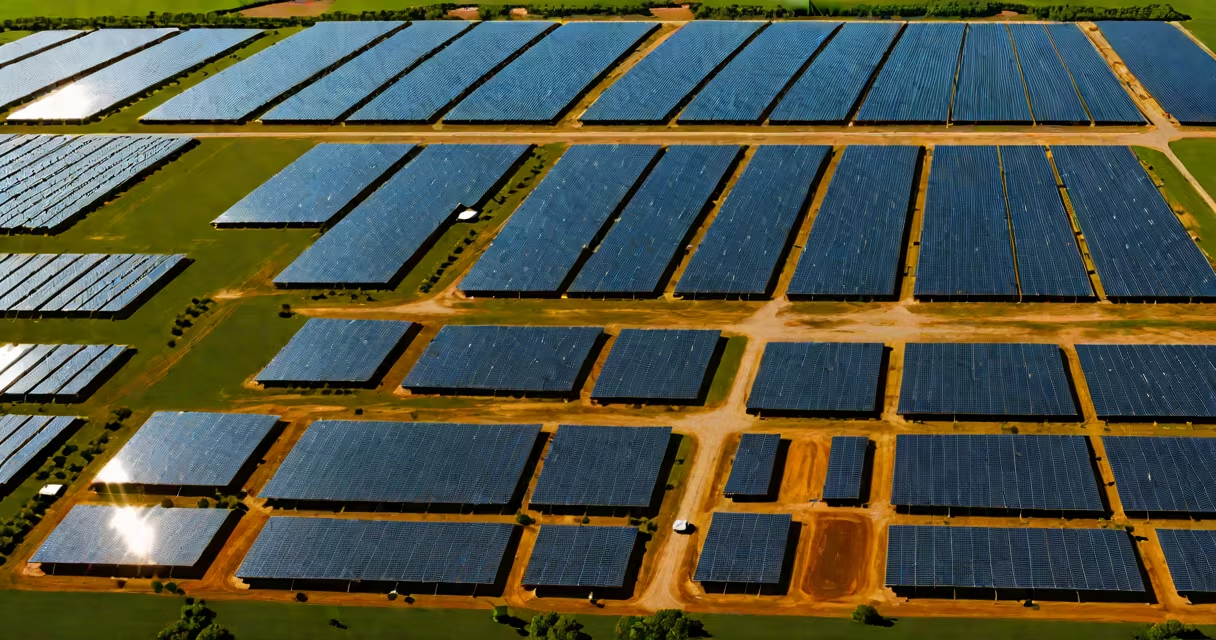
Renewable energy sites are physical locations where natural resources like sunlight, wind, or flowing water are converted into electricity using technologies such as solar panels, wind turbines, or hydroelectric systems. These installations generate power without depleting finite resources or emitting greenhouse gases during operation.
These sites form the core of modern clean energy systems. Unlike fossil fuel plants, which burn coal or gas to produce electricity, renewable energy sites rely on continuous natural flows. Solar farms capture sunlight through photovoltaic cells; wind farms use rotating blades to spin generators; and hydropower stations use the kinetic energy of moving water. All three operate with minimal ongoing emissions, making them critical tools in climate mitigation.
The International Energy Agency (IEA) reports that renewable energy accounted for nearly 30% of global electricity generation in 2023, with solar and wind leading growth. This shift is driven by declining technology costs and policy mandates to reduce carbon emissions. Renewable energy sites are now common across continents, from desert solar arrays in Morocco to offshore wind clusters in the North Sea.
Each site uses a specific conversion process based on the resource it exploits. Solar farms consist of thousands of photovoltaic modules arranged in rows. When sunlight hits the semiconductor material in these panels, electrons move, creating direct current (DC) electricity. An inverter converts DC into alternating current (AC), which powers homes and feeds into the grid.
Wind farms deploy turbines with large blades mounted on tall towers. As wind turns the blades, a shaft spins a generator inside the nacelle. The mechanical rotation generates AC electricity, which is stepped up in voltage via transformers before transmission. Modern turbines can produce up to 15 megawatts (MW) per unit, enough to power around 15,000 homes annually.
Hydroelectric sites use dams or run-of-river setups. Water flows through turbines in a controlled channel, spinning blades connected to generators. The Hoover Dam in Nevada, for example, produces about 4 billion kilowatt-hours per year-enough to supply over 1 million households.
Renewable energy sites fall into several categories based on the primary resource they use. Each type has distinct geographic requirements, installation timelines, and operational characteristics.
| Type | Energy Source | Typical Output Range | Land Use Requirement | Example Location |
|---|---|---|---|---|
| Solar farms | Direct sunlight | 10-200 MW per site | High (up to 10 acres per MW) | California's Topaz Solar Farm (550 MW) |
| Onshore wind farms | Consistent wind patterns | 50-200 MW | Moderate (turbines spaced 500m apart) | Texas' Roserock Wind Project (250 MW) |
| Offshore wind farms | Strong coastal winds | 100-500 MW | Low (over water, no land needed) | UK's Hornsea One (1.2 GW) |
| Hydropower plants | Flowing rivers or reservoirs | 10-600 MW | Variable (dams require large reservoirs) | Brazil's Itaipu Dam (14 GW capacity) |
Geothermal sites extract heat from underground reservoirs to drive steam turbines. Though less widespread, they offer stable baseload power. The Geysers complex in California produces over 700 MW-enough to power San Francisco's downtown area.
Deployment decisions depend on resource availability, grid access, environmental impact, and regulatory frameworks. Solar farms thrive in arid regions with high solar insolation-such as the Mojave Desert or Rajasthan, India-where annual sunlight exceeds 2,000 hours. Wind farms favor elevated or coastal zones with consistent wind speeds above 6 meters per second.
Environmental assessments are mandatory before construction. For example, the U.S. Bureau of Land Management requires developers to evaluate bird migration routes and endangered species habitats near proposed wind sites. In 2021, a study published in Nature Energy found that properly sited wind farms reduced bat mortality by 60% compared to poorly located ones.
Grid integration remains a key challenge. A 2022 report by the National Renewable Energy Laboratory (NREL) showed that 40% of planned solar projects in the U.S. face delays due to insufficient transmission infrastructure. Developers often partner with utilities to build new lines or upgrade existing ones to connect remote sites to demand centers.
One widespread misunderstanding is that renewable energy sites are always environmentally benign. While they emit no CO₂ during operation, their construction can disrupt ecosystems. A single offshore wind farm may displace marine mammals during pile-driving, and large solar farms can alter local microclimates by changing surface albedo-the reflectivity of sunlight.
Another error is equating renewable energy sites with intermittent power. While output fluctuates with weather, modern grids use forecasting tools and battery storage to balance supply. The California Independent System Operator (CAISO) reported in 2023 that solar and wind met 54% of the state's daytime electricity demand, supported by 3 gigawatt-hours of stored energy.
A lesser-known fact: many renewable energy sites now incorporate dual-use strategies. Agrivoltaics-combining solar panels with crop farming-has been piloted in France and Japan. In one project in Chiba Prefecture, farmers grew strawberries under solar panels, achieving 70% of normal yields while generating surplus electricity. This model increases land efficiency and supports rural economies.
In 2022, I visited a 120-MW solar farm in Arizona that used single-axis trackers-panels that rotate throughout the day to follow the sun. The system increased daily output by 25% compared to fixed-tilt models. What surprised me was the noise level: the tracker motors hummed softly at dawn and dusk, a sound absent in older installations. This subtle engineering detail improved performance without increasing visual or auditory disruption.
Renewable energy sites are central to national and international climate goals. The Paris Agreement calls for net-zero emissions by 2050, requiring a rapid expansion of clean energy infrastructure. Countries like Denmark and Uruguay now generate over 50% of their electricity from renewables, largely through well-placed wind and solar sites.
Technological advances continue to improve efficiency. Perovskite solar cells, still in early commercial deployment, have reached lab efficiencies of 25.5%, surpassing traditional silicon-based panels. Meanwhile, AI in renewable energy is being used to predict output and improve maintenance schedules. Algorithms analyze satellite imagery and weather data to forecast solar irradiance with 95% accuracy, reducing downtime and improving grid stability.
For companies investing in long-term energy solutions, understanding the scale and location of renewable energy sites is essential. BP's renewable energy division, for example, operates over 200 wind and solar projects globally, including a 150-MW wind farm in Texas and a 300-MW solar facility in Spain. These assets support corporate sustainability targets and contribute to regional decarbonization efforts.
Renewable energy sites are not just installations-they are changing nodes in a larger energy network. Their success depends on smart siting, integrated storage, and adaptive management. As demand grows, so too must innovation in design, monitoring, and community engagement. The future of energy lies not in replacing old systems overnight, but in building resilient, distributed networks powered by nature itself.