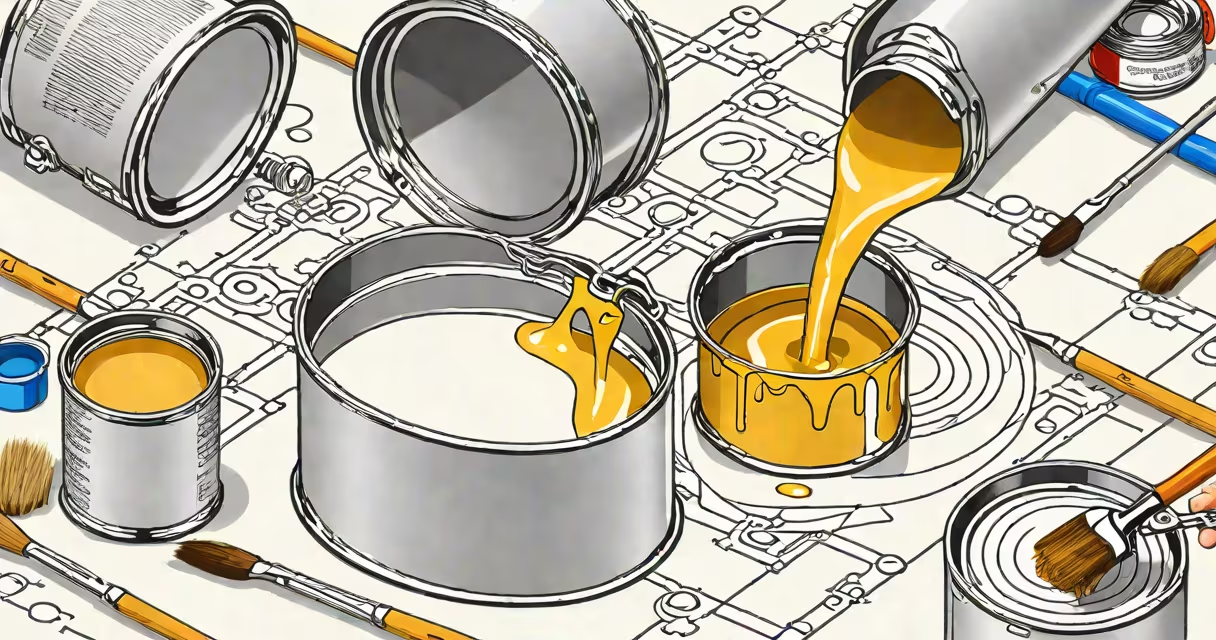
Paint thinners are solvents used to reduce the viscosity of oil-based paints, varnishes, and enamels, making them easier to apply and clean up. They dissolve resins and oils in paint, enabling smoother spreading and faster drying. These chemicals are essential in both industrial and home painting applications.
Oil-based paints contain binders like linseed oil or alkyd resins that dry slowly and can become too thick for brushes or sprayers. Paint thinners lower the paint's thickness by dissolving these components, allowing consistent flow during application. This prevents drips, uneven coverage, and brush marks. Thinning also improves adhesion and surface wetting, especially on porous or previously coated surfaces.
Thinner is not a substitute for paint. Using too much reduces pigment concentration, leading to poor color strength and durability. Most manufacturers recommend adding no more than 10% thinner to paint volume. Exceeding this ratio compromises film integrity and increases the risk of peeling or cracking over time.
Paint thinners function through solvent action. They break down the molecular structure of resin and oil-based binders, reducing intermolecular forces that cause viscosity. The process is similar to how water dissolves sugar-solvent molecules surround and separate larger particles.
When applied, thinners evaporate quickly after application. As they do, the paint's solids (pigments and resins) coalesce into a continuous film. This evaporation rate affects drying time and finish quality. Fast-evaporating thinners like mineral spirits or acetone create quicker drying times but increase the chance of brush marks if not applied properly.
For example, when using alkyd enamel on a garage door, adding 10% mineral spirits to the paint allows even spray application and reduces the likelihood of orange peel texture. Without thinning, the paint may pool or fail to adhere uniformly across the surface.
Not all thinners are interchangeable. Different formulations suit specific paint types and environmental conditions. The most common types include:
| Type | Best For | Common Solvents | Key Properties |
|---|---|---|---|
| Mineral Spirits | Oil-based paints, varnishes | White spirit, Stoddard solvent | Mild odor, slow evaporation, low toxicity |
| Acetone | Fast-drying coatings, cleaning tools | Acetone | High volatility, strong solvent power, flammable |
| Toluene | Industrial-grade paints, adhesives | Toluene | Strong dissolving ability, high flammability, regulated use |
| Isopropyl Alcohol | Water-resistant finishes, cleaning | Isopropanol | Low residue, less effective on heavy oils |
Mineral spirits are the safest option for home use due to their lower vapor pressure and reduced health risks. According to the U.S. Environmental Protection Agency (EPA), mineral spirits have a flash point above 100°F, making them less likely to ignite under normal conditions. Toluene, in contrast, has a flash point below 100°F and is restricted in consumer products under EPA regulations.
Acetone is effective for removing dried paint from brushes or rollers but can degrade certain plastics and rubber seals. I once used acetone to clean a clogged spray gun nozzle-after soaking for 15 minutes, the residue dissolved completely. However, the plastic tip warped slightly, confirming that acetone should never be used on plastic parts.
Many assume paint thinner and paint remover are the same. They are not. Paint thinner reduces viscosity; paint remover breaks down cured paint layers. Removers often contain stronger chemicals like methylene chloride or N-methyl-2-pyrrolidone, which are hazardous and require ventilation and protective gear.
A frequent error is using water-based thinners on oil-based paints. Water cannot dissolve oil-based resins. Adding water to such paint causes separation, clumping, and failure to dry properly. This mistake leads to wasted materials and poor results.
Another misconception is that all thinners are equally safe. Mineral spirits are relatively low-risk, but acetone and toluene pose respiratory and neurological hazards. The National Institute for Occupational Safety and Health (NIOSH) recommends using thinners in well-ventilated areas and wearing gloves and eye protection. Prolonged exposure to vapors can lead to headaches, dizziness, and long-term lung damage.
Suppose you're repainting a wooden deck with exterior-grade alkyd paint. The paint is thick and won't flow smoothly through a roller. You mix 1 cup of paint with 1/4 cup of mineral spirits. After stirring thoroughly, the mixture spreads evenly with minimal effort. The roller leaves no texture, and the paint dries within 6 hours instead of 12.
After finishing, you clean the roller with another 1/4 cup of mineral spirits. The solvent dissolves remaining paint without damaging the foam. You then rinse the roller with warm water and hang it to dry. Without the thinner, the paint would have hardened inside the roller fibers, ruining the tool.
Using the correct amount of thinner ensures performance and longevity. Over-thinning weakens the paint film; under-thinning creates resistance during application. Always test the consistency on scrap wood before starting the project.