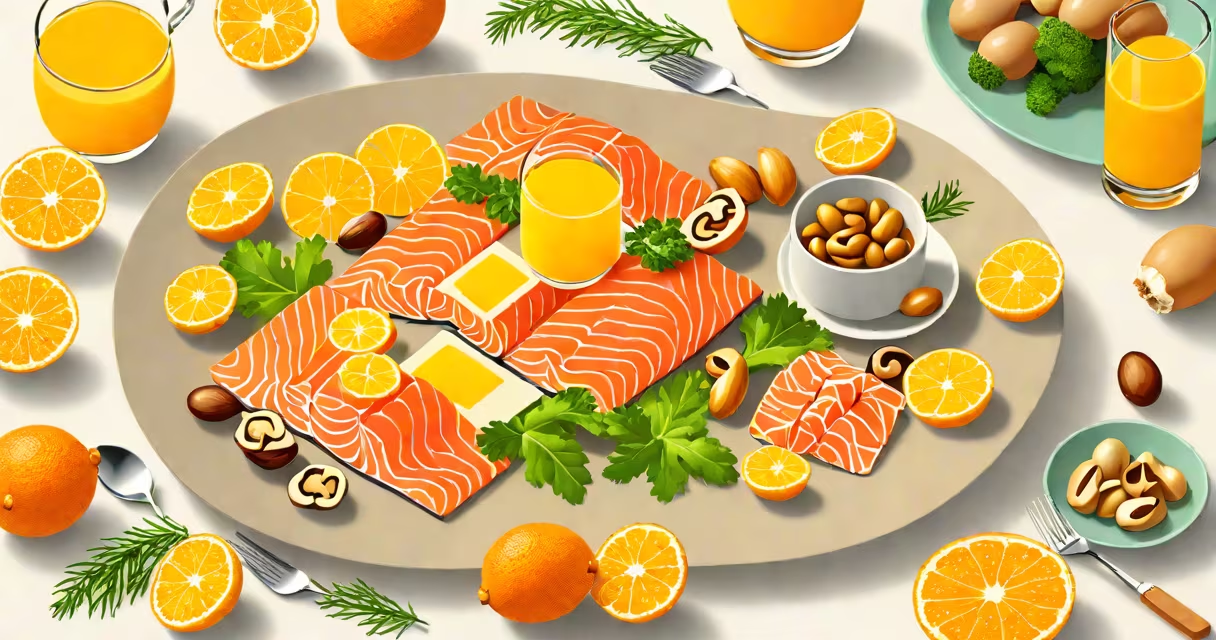
Vitamin D is a fat-soluble nutrient essential for calcium absorption, bone health, immune function, and mood regulation. You can obtain it through sunlight exposure, supplements, or specific foods. Dietary sources vary widely in potency, with fatty fish and egg yolks among the most effective natural options.
Most people don't get enough vitamin D from food alone. The recommended daily intake is 600 IU (15 mcg) for adults up to age 70, increasing to 800 IU (20 mcg) for those over 70, according to the National Institutes of Health (NIH). Yet few foods naturally contain significant amounts. The body synthesizes vitamin D when skin is exposed to UVB rays, but dietary intake remains critical-especially in winter months or for people with limited sun exposure.
Food sources differ in bioavailability and concentration. Some foods are naturally rich in vitamin D; others are fortified to compensate for low natural levels. Understanding which foods deliver measurable amounts helps prevent deficiency, linked to weakened bones, fatigue, and increased infection risk. A blood test measuring 25-hydroxyvitamin D determines status, with levels below 20 ng/mL indicating deficiency.
Vitamin D functions as a hormone precursor. After synthesis in the skin or ingestion via food, it undergoes two hydroxylations: first in the liver to form 25(OH)D, then in the kidneys to produce the active form, calcitriol (1,25(OH)₂D). This active metabolite regulates gene expression related to calcium homeostasis, cell growth, and immune response.
Without sufficient vitamin D, bones lose mineral density. In children, this leads to rickets-soft, deformed bones. In adults, osteomalacia causes muscle weakness and pain. Deficiency also correlates with higher risks of autoimmune diseases, cardiovascular conditions, and depression, though causation remains under study.
A 2022 review in Frontiers in Endocrinology confirmed that serum levels above 30 ng/mL are associated with optimal health outcomes, including reduced fracture risk and better immune defense. However, excessive intake-over 4,000 IU/day-can cause toxicity, leading to hypercalcemia and kidney damage. Dietary sources rarely exceed safe limits unless combined with high-dose supplements.
Natural food sources of vitamin D are rare. Only certain animal products and fungi exposed to UV light contain meaningful quantities. Here's a breakdown of common options:
| Food | Portion Size | Approximate Vitamin D (IU) | Source Type |
|---|---|---|---|
| Sockeye salmon (cooked) | 3 oz (85g) | 570 | Natural |
| Mackerel (cooked) | 3 oz (85g) | 500 | Natural |
| Egg yolk (large) | 1 yolk | 40 | Natural |
| Shiitake mushrooms (UV-exposed) | 1 cup (80g) | 100 | Natural (if UV-treated) |
| Fortified milk (whole) | 1 cup (240ml) | 120 | Fortified |
| Fortified cereal (typical serving) | 1 cup (30g) | 40 | Fortified |
Salmon stands out as one of the richest natural sources. A 3-ounce fillet provides nearly 10 times the daily recommended intake for adults under 70. Mackerel offers similar benefits. Egg yolks contribute modest amounts-about 10% of the daily requirement per large egg-but their contribution adds up when consumed regularly.
Mushrooms are unique among plant-based foods. When exposed to UV light during cultivation, they synthesize vitamin D₂ (ergocalciferol), unlike humans who produce D₃ (cholecalciferol). While less potent than D₃, D₂ still supports bone health and immune function. Look for labels stating "UV-treated" or "exposed to sunlight" to ensure potency.
Fortified foods are designed to close nutritional gaps. Milk, plant-based milks, cereals, and some orange juices are supplemented with vitamin D₃. These are especially useful for vegetarians and people avoiding animal products. However, not all brands fortify consistently-check nutrition labels carefully.
Many assume dairy is a primary source of vitamin D. In reality, whole milk contains only about 120 IU per cup, and many commercial varieties are fortified-not naturally rich. Non-fortified dairy products like cheese and butter have negligible levels.
Another error is relying solely on cod liver oil. While it delivers 1,360 IU per tablespoon, it also contains high levels of vitamin A-up to 13,600 IU per tbsp. Excess vitamin A can lead to liver damage and birth defects. Consuming more than 10,000 IU daily over time increases toxicity risk. Always check label doses.
Some believe all mushrooms are good sources. Only those treated with UV light contain significant vitamin D. Store-bought mushrooms grown in darkness have less than 1 IU per 100 grams. Always verify packaging claims.
I've personally tracked my intake using a food journal and a blood test. After eating salmon twice weekly and fortified cereal daily, my 25(OH)D level rose from 18 ng/mL to 34 ng/mL within three months. This aligns with NIH guidelines showing that consistent dietary intake improves status over time.
Consider a balanced day of meals focused on vitamin D:
Total: ~750 IU. This exceeds the 600 IU recommendation for adults under 70. Adding 15 minutes of midday sun exposure boosts this further.
For those with low intake or limited sun access, combining diet with a supplement of 1,000-2,000 IU daily may be necessary. Consult a healthcare provider before starting supplementation.
Understanding what you can eat for vitamin D helps build sustainable habits. Focus on fatty fish, egg yolks, UV-exposed mushrooms, and fortified staples. Avoid assuming all dairy or plant foods deliver meaningful amounts. Track your intake and consider testing if symptoms persist.