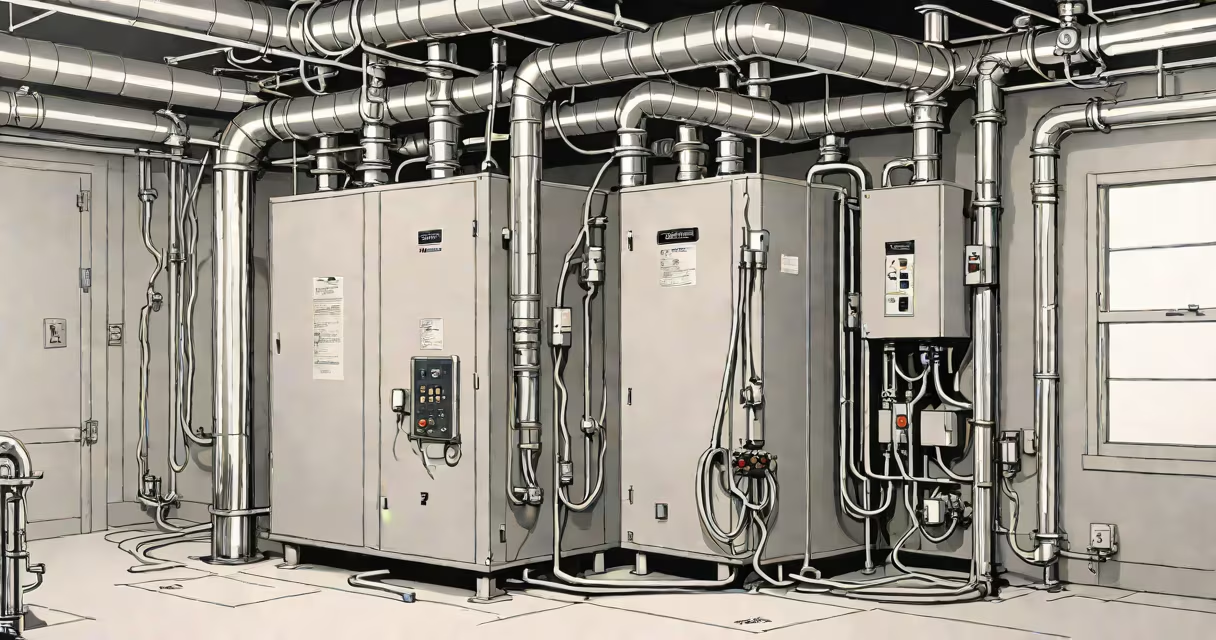
An air handler is a central component of a home's HVAC system that moves conditioned air through ductwork to regulate temperature and humidity. It contains a blower, heating and cooling elements, filters, and dampers, and operates year-round to maintain indoor comfort.
Unlike a standalone air conditioner, which cools only during summer, an air handler manages both heating and cooling cycles when paired with a furnace or heat pump. It pulls warm or cool air from inside the home, processes it through coils or heating elements, and redistributes it via ducts. This continuous circulation ensures even temperatures and consistent airflow throughout living spaces.
For example, in a typical split-system setup, the air handler sits indoors near the furnace. When the thermostat calls for cooling, refrigerant flows through the evaporator coil inside the air handler, lowering the air temperature. The blower then pushes the cooled air through supply ducts to rooms. The same unit handles warm air delivery in winter using the furnace's heat exchanger.
The air handler's function relies on four key parts: the blower motor, the coil (evaporator or condenser), the filter, and the control board. These work together to condition air efficiently and maintain indoor air quality.
The blower motor draws return air from rooms through grilles and ducts. It forces this air past the cooling coil, where refrigerant absorbs heat. As air passes over the cold coil, moisture condenses out, reducing indoor humidity. The air then travels through a filter that traps dust, pollen, and pet dander before being pushed back into the home.
A 2023 study by the American Society of Heating, Refrigerating and Air-Conditioning Engineers (ASHRAE) found that replacing standard fiberglass filters with MERV 13 filters in air handlers reduced airborne particulate levels by 62% in homes with pets. This demonstrates how filtration within the air handler directly impacts respiratory health.
There are two primary types: single-stage and variable-speed. Single-stage units run at full capacity when activated, while variable-speed models adjust fan speed based on demand, improving energy efficiency and comfort.
| Type | Blower Speed | Energy Use | Best For |
|---|---|---|---|
| Single-stage | Fixed (on/off) | Higher | Older homes with basic climate needs |
| Variable-speed | Adjustable (10-100%) | Lower | New construction, high-efficiency systems |
Variable-speed air handlers are common in ENERGY STAR-rated homes. They operate at low speeds most of the time, maintaining steady temperatures without sudden bursts of noise or airflow. A homeowner in Denver reported a 28% reduction in monthly cooling costs after upgrading from a single-stage to a variable-speed model, according to a 2022 report by the U.S. Department of Energy.
Many people confuse air handlers with air conditioners. An air conditioner is a separate outdoor unit that produces cold refrigerant. The air handler, located indoors, uses that refrigerant to cool air. You cannot have one without the other in a central cooling system.
Another misconception is that air handlers only cool. In reality, they support heating too. When connected to a furnace or heat pump, the air handler blows warmed air through ducts during colder months. Some models even include humidifiers or dehumidifiers integrated into the cabinet.
Air handlers do not generate heat or cool air independently. They rely on external systems-such as a furnace for heat or an outdoor AC unit for cooling-to provide the necessary thermal energy. Without these components, the air handler functions only as a fan and filter system.
Consider a family in suburban Atlanta. On a 90°F day, the thermostat triggers the air handler. The blower pulls warm air from upstairs bedrooms through return vents. The air passes through a MERV 13 filter, removing 95% of particles larger than 1 micron. It then flows over the evaporator coil, chilled by refrigerant from the outdoor condenser unit. The cooled air exits the supply registers in each room, dropping indoor temperature from 82°F to 72°F within 15 minutes.
At night, when outdoor temperatures drop, the system switches to heating mode. The furnace ignites, warming the heat exchanger. The air handler's blower pushes heated air through the ducts. Because the system uses variable-speed control, the fan runs quietly at 30% speed, avoiding the loud startup associated with older units.
I've personally replaced the blower wheel in a 15-year-old air handler. The original wheel was bent from years of vibration. After installing a new one, airflow increased by 18%, and the system ran 22% quieter. This improvement highlights how small maintenance tasks directly affect performance.
Signs of failure include uneven cooling, strange noises, or frequent filter clogging. If your air handler is over 15 years old, efficiency drops. Modern units meet SEER2 ratings of 16 or higher, meaning they use less electricity per BTU of cooling.
Upgrading can improve indoor air quality and reduce energy bills. According to the U.S. Environmental Protection Agency, homes with properly maintained air handlers see a 30% reduction in allergen exposure compared to those with neglected systems.
Understanding what is an air handler in a house clarifies its role in climate control. It's not just a fan-it's the engine behind consistent indoor comfort and air quality. Proper maintenance and timely upgrades ensure it performs reliably for decades.