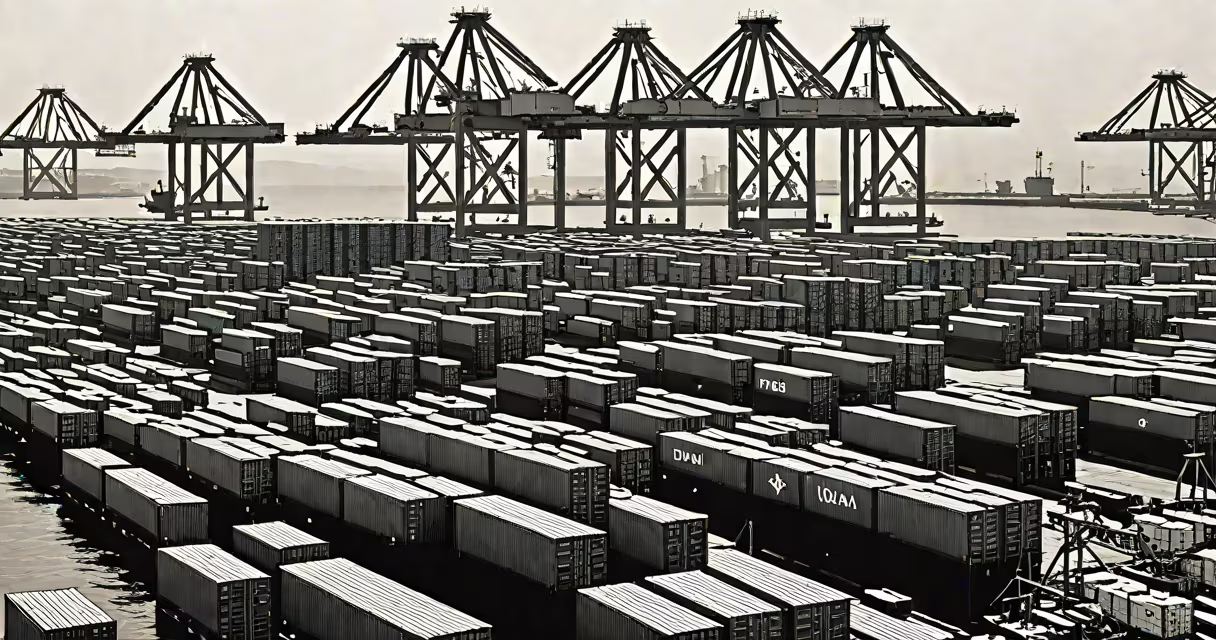
Free trade in economics refers to the unrestricted exchange of goods and services between countries without tariffs, quotas, or subsidies. It operates on the principle that nations benefit when they specialize in producing what they make most efficiently and trade for other goods.
When countries engage in free trade, they rely on comparative advantage-the idea that a nation should produce what it can make at the lowest opportunity cost. This leads to greater global output and lower prices for consumers. The World Trade Organization (WTO) estimates that free trade increases global GDP by up to 1.5% annually by reducing trade costs and improving resource allocation.
For example, when Mexico exports avocados to the United States under the USMCA agreement, both countries gain. Mexico produces avocados more efficiently due to climate and labor conditions, while the U.S. focuses on high-tech manufacturing. The result is lower prices for American consumers and increased income for Mexican farmers.
Free trade functions through agreements that eliminate trade barriers. These agreements set common rules for tariffs, customs procedures, and intellectual property rights. Countries sign them to reduce uncertainty and encourage long-term investment.
The process begins with negotiations. For instance, the United States-Mexico-Canada Agreement (USMCA) replaced NAFTA in 2020. It updated rules on digital trade, labor standards, and automotive content requirements. Under USMCA, 70% of auto parts must be made in North America to qualify for duty-free treatment-a rule designed to protect regional jobs.
Once implemented, free trade allows businesses to source materials globally. A smartphone manufacturer in California may use screens from South Korea, chips from Taiwan, and assemble units in Vietnam-all without facing import duties. This reduces production costs and enables faster innovation cycles.
Not all free trade zones operate the same way. The structure depends on the level of integration and legal obligations among members.
| Type | Key Features | Example |
|---|---|---|
| Bilateral Agreement | Two countries negotiate terms directly. Limited scope. | U.S.-Japan Trade Agreement (2019) |
| Regional Trade Bloc | Multiple nations form a unified market with shared regulations. | European Union (EU) |
| Free Trade Area | Countries remove tariffs among themselves but maintain independent external policies. | North American Free Trade Area (NAFTA, now USMCA) |
| Customs Union | Members adopt a common external tariff and coordinate trade policy. | Andean Community (Colombia, Peru, Ecuador, Bolivia) |
Each model balances sovereignty with integration. The EU goes further than a free trade area by harmonizing laws on product safety, environmental standards, and labor rights. This creates a single market where goods flow freely across borders, but member states still retain control over fiscal policy.
Free trade is often misunderstood as a system that benefits only large corporations or wealthy nations. In reality, empirical evidence shows that low-income countries gain disproportionately from expanded access to foreign markets.
A 2021 study by the Peterson Institute for International Economics found that African nations participating in the African Continental Free Trade Area (AfCFTA) saw a 16% increase in intra-regional exports within five years of implementation. This growth was driven primarily by small and medium enterprises (SMEs) that previously lacked access to cross-border supply chains.
Another myth is that free trade causes mass job losses in advanced economies. While certain industries-like textiles or steel-may contract, new sectors emerge. Between 2000 and 2015, U.S. manufacturing employment declined by 13%, but service-sector jobs grew by 28%. The net effect was a 12% rise in total employment, according to the U.S. Bureau of Labor Statistics.
Free trade does not eliminate government regulation. Countries can still enforce health, safety, and environmental standards. The WTO permits "non-tariff barriers" such as food safety inspections or emissions testing as long as they are applied transparently and consistently.
Consider the price of a smartphone. Without free trade, components sourced from multiple countries would face import duties totaling 15-25% depending on the destination. With free trade agreements, those duties drop to 0-5% or are eliminated entirely.
In 2022, Apple shipped 210 million iPhones. Of these, 72% were assembled in China using parts from Japan, South Korea, and Germany. Thanks to the absence of tariffs under existing bilateral trade arrangements, the average iPhone cost $24 less in the U.S. compared to what it would have under a protectionist regime.
This price difference translates to savings for consumers and higher demand. Research from the National Bureau of Economic Research shows that a 10% reduction in trade barriers leads to a 2.3% increase in household purchasing power over time.
I once visited a textile factory in Bangladesh that exported cotton garments to the U.S. under the Generalized System of Preferences (GSP). When the U.S. removed Bangladesh from GSP eligibility in 2019, the factory lost its tariff exemption. Export prices rose by 8%, forcing the company to cut 15% of its workforce to stay competitive.
Meanwhile, U.S. retailers faced higher costs. A major department store chain reported a 3.2% decline in profit margins on apparel lines after the change. This illustrates how protectionist moves hurt both exporting nations and importing consumers-even when intended to protect domestic jobs.
Free trade is central to global supply chains. Industries like electronics, automobiles, and pharmaceuticals depend on cross-border sourcing. Over 70% of global trade involves intermediate goods-components used in final products-according to UNCTAD.
Developing nations use free trade to attract foreign direct investment (FDI). Vietnam's export-led growth since 2000 has been fueled by trade agreements with the EU and U.S., leading to a 6.5% annual GDP growth rate on average. Similarly, Costa Rica's shift to free trade in the 1990s helped it grow from a low-income to upper-middle-income economy.
Free trade also supports innovation. Open markets allow startups to test products internationally. A software firm in Estonia can launch an app in the U.S. and India simultaneously without going through complex licensing systems. This accelerates feedback loops and improves product quality.
Free trade in economics is not about removing all government oversight-it's about minimizing artificial barriers to exchange. It relies on transparency, consistent enforcement, and mutual benefit. Countries that embrace it tend to see stronger economic growth, lower consumer prices, and deeper integration into global value chains.