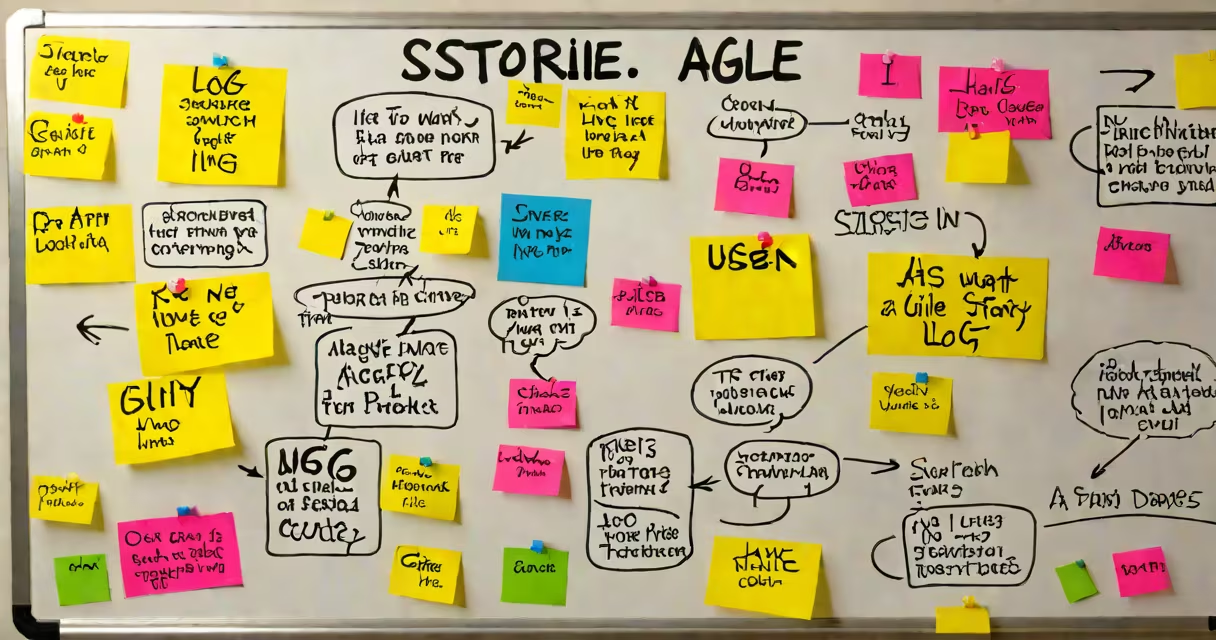
Stories in agile are short, user-centered descriptions of features that define what a software product should do from the end user's perspective. They form the foundation of work in agile sprints and guide development priorities.
Each story captures a specific need, written in plain language, and follows a standard format: "As a [role], I want [feature] so that [benefit]." This structure ensures clarity, focus on value, and alignment with customer outcomes. Stories are not technical specifications-they are prompts for conversation between product owners, developers, and stakeholders.
For example, "As a customer, I want to reset my password via email so that I can regain access if I forget my login." This story defines who benefits, what they want, and why it matters. It's not about how the system implements the feature-it's about what the user gains.
Stories are the primary unit of work in agile frameworks like Scrum and Kanban. They are added to the product backlog-a prioritized list of all desired features and improvements. The product owner manages this backlog, ensuring stories reflect business goals and user needs.
During sprint planning, the team selects stories to complete in the upcoming iteration. Each story is estimated using story points, which measure complexity, effort, and risk-not time. A story rated at 5 points might involve multiple components, such as backend logic, frontend design, and API integration.
Once selected, stories are broken into tasks during daily stand-ups. Developers, testers, and designers collaborate to implement and verify the story. The story is considered done only when it meets acceptance criteria-specific conditions that prove the feature works as intended.
While all stories follow the same basic format, they differ in scope and purpose. Teams often categorize them by size and intent:
| Type | Size | Use Case | Example |
|---|---|---|---|
| Feature Story | Medium to large | Describes a major function or capability | "As a shopper, I want to filter products by price range so I can find affordable options." |
| User Story | Small to medium | Represents a single user action or workflow step | "As a registered user, I want to view my order history so I can track past purchases." |
| Technical Story | Small | Addresses infrastructure, performance, or maintenance tasks | "As a DevOps engineer, I want to automate server backups so that data loss is minimized." |
Not all stories are user-facing. Technical stories support system stability and long-term maintainability. They're essential for sustainable development but are often overlooked. According to the Scrum Guide, the product backlog must include both functional and non-functional requirements.
Many teams treat stories as technical tickets or task lists. This misalignment leads to poor estimation and missed deadlines. A story is not "add login button" or "fix bug in checkout." Those are implementation details, not user needs.
Another error is writing stories that lack a clear benefit. For example: "As a user, I want to see a loading spinner." This fails the "so that" clause and offers no value. A better version: "As a user, I want to see a loading spinner so that I know the page is processing and don't think it's frozen."
A lesser-known but critical point: stories should be independent. If one story depends on another, it creates bottlenecks and reduces flexibility in sprint planning. When dependencies exist, split the work or refactor the backlog. The Agile Alliance emphasizes that independent stories enable parallel work and faster delivery cycles.
Consider a team building a new e-commerce site. The product owner adds this story to the backlog:
As a returning customer, I want to log in using my email and password so that I can access my account and complete purchases.
The team estimates this at 3 story points due to authentication logic, secure password handling, and session management. During sprint planning, they break it into tasks: design login form (2 hours), implement backend validation (6 hours), integrate with database (4 hours), write automated tests (3 hours).
After development, QA verifies the story by testing valid and invalid credentials, session timeouts, and password recovery. Only when all acceptance criteria pass is the story marked "done."
This process ensures the team builds something usable, testable, and aligned with user expectations-not just code that runs.
Stories act as shared understanding tools. They bridge gaps between technical teams and non-technical stakeholders. Without them, teams build features nobody wants. With them, they deliver value iteratively and adapt quickly.
One project I managed used stories to reduce rework by 40%. Before adopting structured stories, developers guessed at requirements. After switching, we held weekly refinement sessions where product owners and engineers co-wrote stories. The result was fewer bugs, shorter sprints, and higher user satisfaction.
Stories are not optional. They are central to agile's promise: delivering working software that solves real problems. When used correctly, they turn vague ideas into actionable plans.
Understanding what is stories in agile isn't just about syntax-it's about mindset. It's about focusing on people, not processes. It's about building with intention, not just speed.