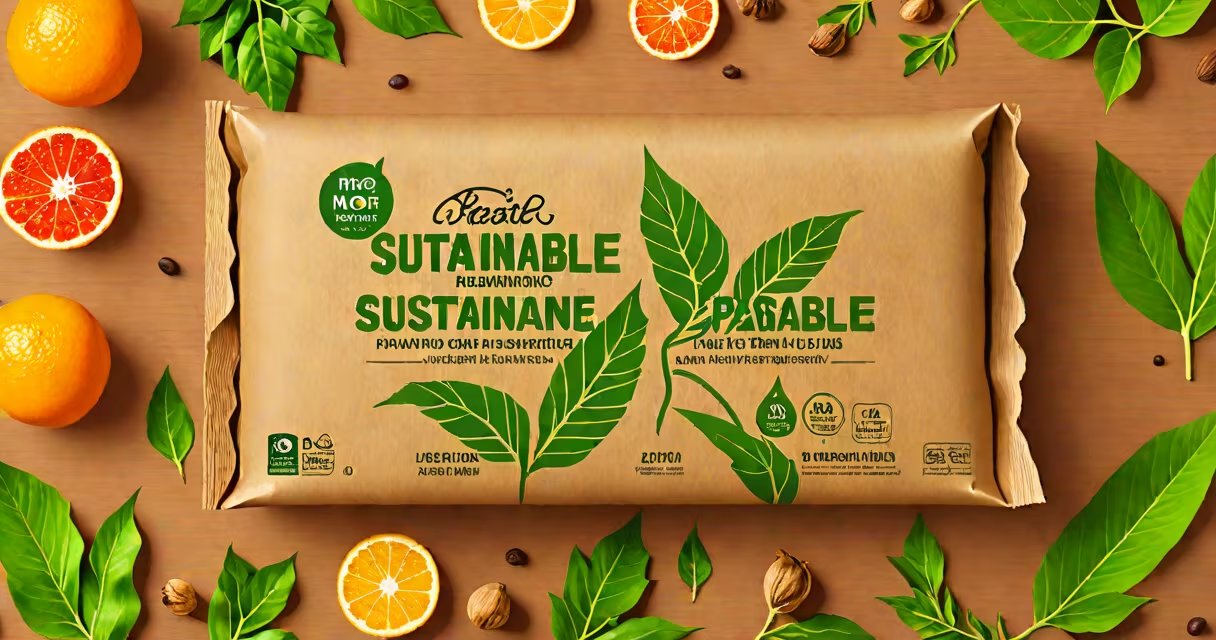
Sustainable packaging minimizes environmental impact by using materials that are recyclable, biodegradable, or made from renewable resources, and by reducing material use. It's designed to protect products while limiting waste, carbon emissions, and resource depletion throughout its lifecycle.
Unlike conventional packaging made from virgin plastics or non-recyclable composites, sustainable packaging prioritizes long-term ecological health. It's evaluated not just by what it's made of, but by how it's sourced, manufactured, used, and disposed of. The goal is to close the loop-keeping materials in use and out of landfills.
The U.S. Environmental Protection Agency (EPA) estimates that packaging accounts for nearly 30% of municipal solid waste. Sustainable packaging aims to reverse that trend. According to the Ellen MacArthur Foundation, shifting to circular packaging systems could reduce plastic waste by 80% by 2040 if widely adopted.
It functions through three core principles: material choice, design efficiency, and end-of-life management. A package made from recycled paper with soy-based ink and minimal excess material exemplifies all three.
Material choice focuses on inputs that regenerate quickly-like bamboo, sugarcane bagasse, or recycled cellulose-and avoid fossil fuels. Design efficiency means using less material without compromising protection. For example, a cereal box redesigned to use 20% less cardboard still maintains structural integrity during shipping.
End-of-life management ensures the package can be recycled, composted, or reused. A compostable mailer made from cornstarch and water-based adhesives breaks down into soil nutrients within 90 days under industrial composting conditions, as certified by the Biodegradable Products Institute (BPI).
Not all sustainable materials are equal. Their environmental footprint depends on sourcing, processing energy, and disposal infrastructure. The table below compares common options:
| Material | Source | Recyclability | Compostability | Key Limitation |
|---|---|---|---|---|
| Recycled paperboard | Post-consumer waste | Yes (widely accepted) | No | Can degrade in moisture |
| Bamboo fiber | Rapidly renewable plant | Low (not standard in recycling streams) | Yes (industrial compost) | Requires specialized facilities |
| Polylactic acid (PLA) | Cornstarch | No (confuses recycling systems) | Yes (industrial only) | Doesn't break down in home compost |
| Recycled PET (rPET) | Reprocessed plastic bottles | Yes (if clean) | No | Energy-intensive to recycle |
One key distinction often missed: compostable doesn't mean "safe in nature." PLA, for example, only degrades under high heat and controlled microbial environments. In a landfill, it persists for years. The BPI certification requires testing under ASTM D6400 standards-meaning real composting conditions, not just theoretical breakdown.
Major retailers and consumer goods companies have adopted sustainable packaging to meet regulatory pressure and customer demand. Unilever reported in 2023 that 90% of its packaging is now recyclable, reusable, or compostable-up from 60% in 2018.
Amazon's "Frustration-Free Packaging" program eliminated 1.2 million tons of excess packaging between 2015 and 2022. The company uses molded pulp trays made from recycled paper and eliminates outer boxes for small items. This reduced shipping volume by 15%, cutting fuel use and emissions.
Small businesses also benefit. A local bakery in Portland switched from plastic wrap to wax-coated paper sourced from FSC-certified forests. They saw a 12% increase in repeat customers citing "eco-conscious values," according to their internal survey.
Many assume "biodegradable" equals "environmentally safe." That's incorrect. A biodegradable plastic may break down faster than traditional plastic-but only in specific conditions. In ocean water or soil, it can release microplastics or methane, a potent greenhouse gas.
Another myth: "All paper packaging is sustainable." Paper production consumes large amounts of water and energy. A study by the University of Michigan found that producing one ton of paper generates 1.5 tons of CO₂ equivalent. Using recycled paper reduces this by 60%, but virgin paper still has a significant footprint.
I once tested a "compostable" coffee cup labeled as such. After 12 weeks in a backyard compost bin, it showed no visible degradation. Only after placing it in a commercial compost facility did it break down. This mismatch between labeling and real-world performance is widespread.
Loop is a global reuse platform launched in 2019. It partners with brands like Procter & Gamble and Nestlé to deliver products in durable, returnable containers. Consumers receive items in aluminum or thick plastic containers, use them, then send them back via prepaid label.
Each container is cleaned and refilled up to 100 times. In pilot cities, Loop reduced single-use packaging waste by 78% compared to traditional delivery models. The system relies on logistics networks and consumer participation-but it proves that sustainable packaging isn't limited to disposables.
Sustainable packaging is not a single material or label. It's a system of decisions-about sourcing, design, durability, and disposal-that collectively reduce environmental harm. It's not about perfection, but progress toward circularity.
When evaluating packaging, ask: What's it made of? Can it be recycled or composted locally? How much material was used? The most effective solutions combine low-impact materials with reuse models.