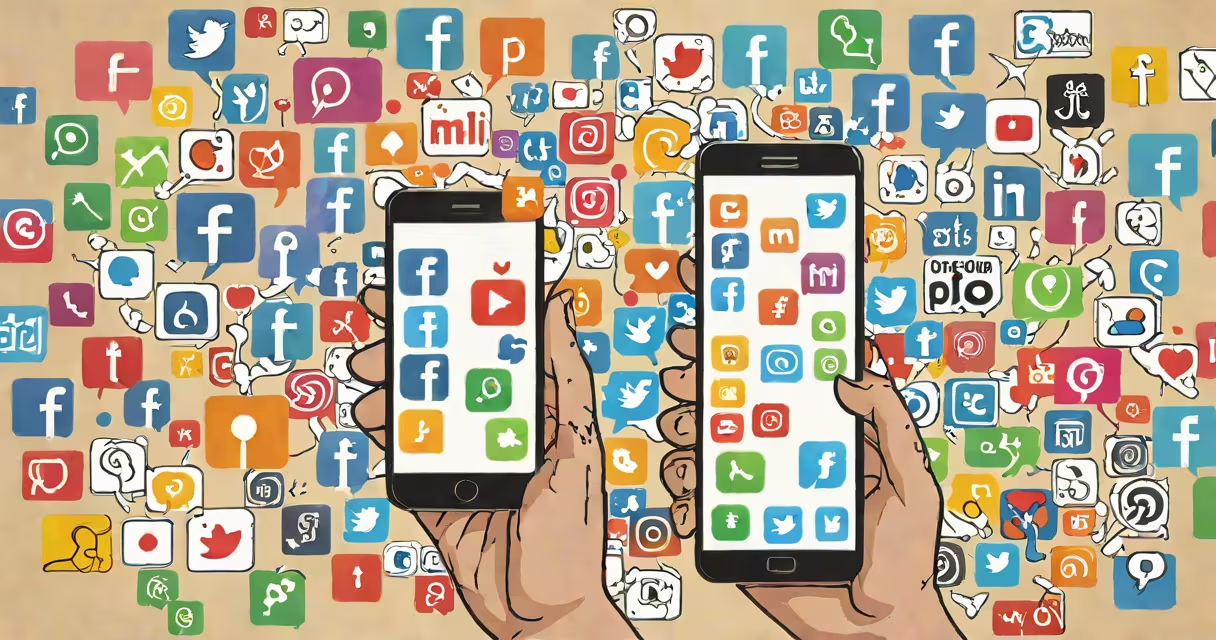
Social media refers to digital platforms that enable users to create, share, and interact with content in real time. These tools help communication, community building, and information exchange across networks. The core function is user-driven interaction, not passive consumption.
At its foundation, social media operates through networked digital environments where individuals and organizations publish text, images, videos, and audio. Unlike traditional media, which flows one-way from broadcaster to audience, social media allows immediate feedback, resharing, and collaborative content creation. Platforms like Facebook, Instagram, TikTok, and X (formerly Twitter) exemplify this changing.
The definition hinges on interactivity. A post on a blog or a video on YouTube is not automatically social media unless users can comment, like, share, or respond. The presence of engagement features-likes, shares, direct messages, live streams-is what distinguishes social media from static web content.
Platforms use algorithms to prioritize content based on user behavior. When a person likes or shares a post, the system learns their preferences and shows similar content. This creates personalized feeds that evolve over time. For example, TikTok's "For You Page" uses machine learning to surface videos aligned with a user's viewing habits.
Users generate content through uploads, comments, and live broadcasts. Behind the scenes, servers store data, and databases track interactions. APIs (application programming interfaces) allow third-party developers to build tools that integrate with platforms-such as scheduling apps for Instagram or analytics dashboards for X.
Privacy settings control visibility. A user can set a post to "public," visible to anyone; "friends only," limited to approved connections; or "private," accessible only to selected individuals. These controls define who sees what and influence how content spreads.
Not all social media functions the same way. Different formats serve distinct purposes and attract varied audiences.
| Type | Key Features | Examples | Primary Use Case |
|---|---|---|---|
| Microblogging | Short-form text posts, hashtags, real-time updates | X, Mastodon | News sharing, political discourse, rapid response |
| Visual Sharing | Image and video uploads, filters, stories | Instagram, Snapchat | Personal branding, lifestyle content, influencer marketing |
| Video-Centric | Long-form and short-form video, live streaming | TikTok, YouTube, Twitch | Entertainment, education, gaming communities |
| Professional Networking | Profile-based resumes, job postings, industry discussions | LinkedIn, X (for professionals) | Career development, business outreach, B2B communication |
| Community Forums | Threaded discussions, moderation, interest-based groups | Reddit, Discord | Niche topic exploration, support groups, fan communities |
Each platform designs its interface around specific behaviors. TikTok rewards novelty and speed; LinkedIn emphasizes credibility and achievement. Understanding these differences helps users choose the right tool for their goals.
Many assume all online interaction counts as social media. A website with a contact form or a forum without user profiles doesn't qualify. The key is persistent user identity and ongoing interaction. A single comment on a news site isn't social media-it lacks sustained engagement infrastructure.
Another error is equating popularity with social media. A viral meme shared via email or WhatsApp may spread quickly, but those aren't social media platforms unless they have structured profiles, follower systems, and content feeds. WhatsApp is a messaging app; it becomes part of social media only when integrated into larger ecosystems like Facebook.
A lesser-known distinction: not all user-generated content is social media. A personal blog hosted on WordPress with no commenting system is content creation-but not social media. The presence of a feedback loop-comments, likes, shares-is essential.
In 2023, a nonprofit launched a campaign to reduce plastic waste. They created a series of short videos showing how everyday items contribute to ocean pollution. These were posted on Instagram and TikTok with the hashtag #PlasticFreeLife.
On Instagram, users could like, comment, and share the videos. The nonprofit monitored engagement and reposted user testimonials. On TikTok, creators remixed the videos with dance challenges and educational skits. The campaign gained 1.2 million views in three weeks and inspired local clean-up events.
This qualifies as social media because it involved user participation, real-time feedback, content remixing, and networked distribution-all core elements of the definition. The campaign succeeded not because of the message alone, but because it leveraged the interactive nature of social platforms.
I once ran a small community garden project using only Facebook and WhatsApp. We posted weekly updates, invited members to suggest plants, and held virtual meetings. Within six months, membership grew from 12 to 87 people. The platform wasn't just a bulletin board-it became a space where decisions were made collectively, problems discussed in real time, and new ideas tested through comments and reactions.
This experience confirmed that social media isn't just about posting content. It's about enabling dialogue, fostering trust, and supporting collective action. Without interaction, even well-designed posts fade into silence.
According to the Pew Research Center, 72% of U.S. adults use at least one social media platform. Their 2023 report defines social media as "digital tools that allow users to create and share content with others in a networked environment." This aligns with the standard definition used by academic researchers and tech policy bodies.
The Oxford Internet Institute identifies four criteria for social media: (1) user-generated content, (2) persistent identities, (3) networked structure, and (4) interactive features. Any platform missing one or more of these fails the test.
One common mistake is treating social media as synonymous with "online" or "digital." Not all digital activity is social. A user watching a tutorial on YouTube without commenting or sharing is consuming content-not engaging socially. The difference lies in whether the user is part of a two-way system.
The definition of social media centers on interaction, identity, and networked sharing. It is not about the medium itself, but about how people use it to connect. Whether for activism, entertainment, or daily conversation, social media thrives on participation. Understanding this definition clarifies how it shapes modern life-from personal relationships to global movements.