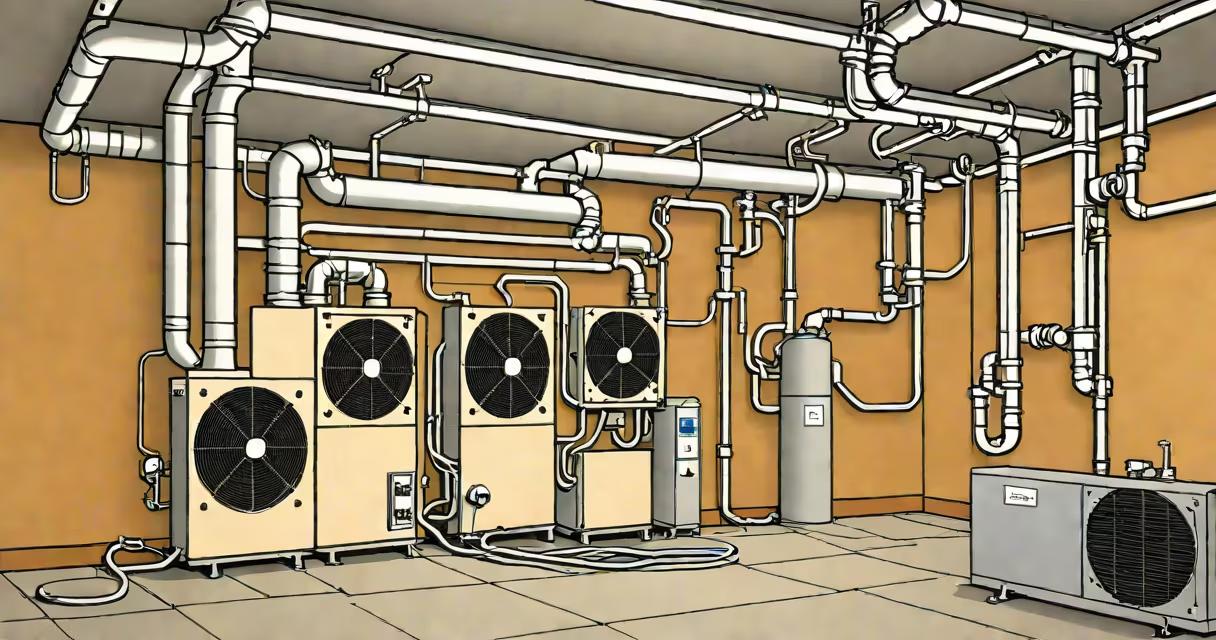
HVAC stands for heating, ventilation, and air conditioning-integrated systems that manage indoor temperature, humidity, and air quality. AC, short for air conditioning, is a subset of HVAC focused solely on cooling. While all AC systems are part of an HVAC setup, not all HVAC systems include AC components.
Heating and cooling are separate functions. A furnace provides heat during winter; an air conditioner removes heat in summer. Ventilation ensures fresh air circulation and reduces indoor pollutants. Together, these elements form a complete HVAC system. An AC unit alone cannot regulate temperature year-round-it lacks heating capability and airflow management.
For example, a typical home in a four-season climate uses a furnace for winter heating and a central air conditioner for summer cooling. These components connect to a shared duct network and control system, forming a full HVAC installation. A standalone window AC unit operates independently and does not integrate with other heating or ventilation features.
HVAC systems maintain thermal comfort and indoor air quality through coordinated processes. The core mechanism involves refrigerant cycles, fans, dampers, and thermostats. When cooling is needed, the system draws warm indoor air over cold evaporator coils. Refrigerant absorbs heat, turns into vapor, and travels to the condenser outside, where it releases heat and returns to liquid form.
For heating, most systems use a furnace that burns gas or electric resistance to warm air, which then moves through ducts. Heat pumps reverse the refrigeration cycle to extract warmth from outdoor air even in sub-freezing temperatures. They provide both heating and cooling using the same compressor and coil setup.
Modern HVAC systems include variable-speed blowers, smart thermostats, and zoning controls. These features adjust output based on room demand, improving energy efficiency. According to the U.S. Department of Energy, properly maintained HVAC systems can reduce energy consumption by up to 20% compared to older models.
Systems vary by application, capacity, and installation method. Residential and commercial buildings have different requirements based on size, occupancy, and climate.
| Type | Function | Common Use | Energy Efficiency |
|---|---|---|---|
| Central HVAC | Heating and cooling via ducts | Single-family homes, offices | SEER 14-26, AFUE 80-98% |
| Split AC | Cooling only; indoor and outdoor units | Apartment units, small homes | SEER 13-22 |
| Heat Pump | Heating and cooling using refrigerant reversal | Temperate climates, new construction | SEER 16-25, HSPF 7-10 |
| Window AC | Self-contained cooling unit | Small rooms, rentals | SEER 10-14 |
Central HVAC systems are common in larger homes. They distribute conditioned air through a network of supply and return ducts. Split systems consist of an indoor air handler and an outdoor condenser. They offer better noise control and efficiency than window units.
Heat pumps are increasingly popular due to rising electricity rates and climate regulations. They move heat rather than generate it, making them more efficient than traditional furnaces in mild weather. The U.S. Environmental Protection Agency notes that heat pumps can reduce greenhouse gas emissions by up to 50% compared to gas furnaces in regions with clean power grids.
Residential buildings typically install central HVAC systems. A 2,500-square-foot home in Chicago may use a gas furnace paired with a 16 SEER air conditioner. This combination maintains indoor temperatures between 68°F and 72°F year-round. The system runs on a programmable thermostat that adjusts settings based on time of day and occupancy.
Commercial buildings often require zoned HVAC systems. A retail store with multiple departments might use variable refrigerant flow (VRF) systems. These allow individual temperature control for different zones, reducing energy waste. A 2022 study by the American Society of Heating, Refrigerating and Air-Conditioning Engineers (ASHRAE) found that VRF systems reduced energy use by 30% in retail environments compared to conventional systems.
Window AC units remain common in apartments and older housing. They're low-cost and easy to install. However, they don't support whole-home ventilation or humidification. Their efficiency drops above 90°F ambient temperature, limiting their usefulness in hot climates.
Many people assume AC and HVAC are interchangeable. That's incorrect. AC refers only to cooling. HVAC includes all three functions: heating, ventilation, and cooling. Confusing the two leads to poor system selection and maintenance errors.
Another misconception is that higher SEER ratings always mean lower operating costs. While higher SEER values indicate better efficiency, actual savings depend on local electricity prices, usage patterns, and system sizing. A 20 SEER system in a sunny Arizona home may save less than a 14 SEER unit in a cooler Pacific Northwest climate due to differing cooling loads.
I once replaced a failing window AC in a rental apartment. The tenant wanted a "new HVAC system." After checking the building's mechanical room, I found no ductwork or furnace. The only viable solution was a split AC system. I explained the difference between AC and HVAC to avoid confusion. The tenant appreciated the clarity and approved the upgrade.
Some systems labeled "HVAC" only include cooling and ventilation. True HVAC systems must have heating capability. A system with a fan and AC but no furnace or heat pump is not a complete HVAC system. Always verify all three components-heating, ventilation, and cooling-when evaluating a system.
The difference between HVAC and AC is functional, structural, and technical. HVAC integrates heating, cooling, and airflow control. AC focuses exclusively on cooling. Understanding this distinction prevents miscommunication with contractors, improves equipment selection, and supports long-term energy savings.
When choosing a system, consider your climate, building size, and usage patterns. A central HVAC system suits most homes. A split AC or heat pump works well in smaller spaces. Always consult a licensed HVAC technician to assess load calculations and proper sizing. The right choice ensures comfort, reliability, and efficiency.