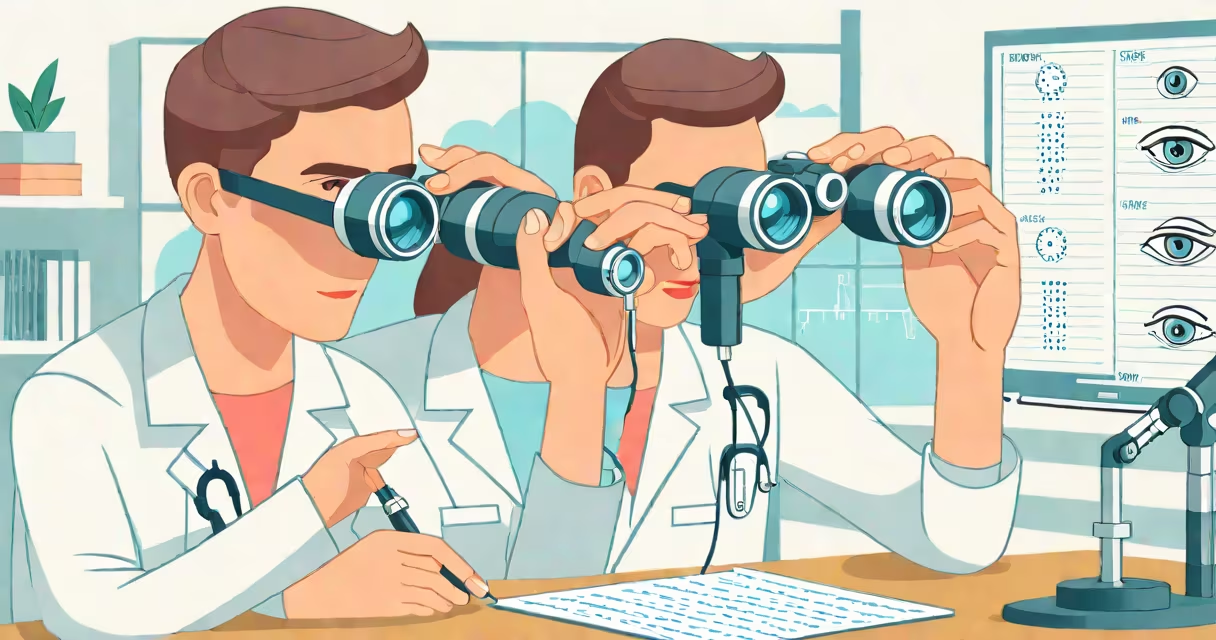
Optometry is the healthcare profession dedicated to examining, diagnosing, and managing conditions affecting the eye and visual system. Optometrists assess vision clarity, detect eye diseases, and prescribe corrective lenses or treatments. This field combines clinical science, patient care, and ongoing education to maintain optimal eye health.
Optometrists perform complete eye exams using tools like retinoscopes, phoropters, and ophthalmoscopes. They measure refractive errors such as myopia, hyperopia, astigmatism, and presbyopia. Based on results, they recommend eyeglasses, contact lenses, or vision therapy. In many states, optometrists can also treat certain eye conditions with medication or refer patients to ophthalmologists for surgery.
The term "optometry" derives from Greek roots: *optos* meaning "seen" and *metron* meaning "measure." The profession emerged in the 19th century as a response to growing demand for accurate vision correction beyond basic spectacle fitting. Today, optometrists are primary eye care providers in most U.S. states and countries with regulated healthcare systems.
During a typical exam, an optometrist evaluates visual acuity, eye alignment, pupil response, and intraocular pressure. They use automated devices and manual techniques to assess the retina, optic nerve, and cornea. A standard test includes reading letters from a Snellen chart at 20 feet, followed by a refraction test to determine lens power needed for clear vision.
For example, a patient reports blurry distance vision. The optometrist measures visual acuity at 20/40 in both eyes. After dilating the pupils, they observe no signs of cataracts or macular degeneration. Using a phoropter, they find that -2.00 diopters in both eyes corrects the vision to 20/20. The patient receives a prescription for glasses with those values.
Some optometrists specialize in pediatric vision, low-vision rehabilitation, or contact lens fitting. Others work in military, public health, or research settings. The American Optometric Association (AOA) reports that over 50,000 licensed optometrists practice in the United States, with nearly 90% working in private clinics or retail chains.
Optometry varies by setting, focus, and regulatory environment. The following table outlines common practice types:
| Type | Focus Area | Common Services | Regulatory Scope |
|---|---|---|---|
| Private Clinic | General eye care | Eye exams, prescriptions, dry eye treatment | State licensing required |
| Retail Chain | Refractive services | Frame selection, contact lens fitting, vision screening | Corporate protocols, limited medical diagnosis |
| Specialty | Neuro-optometry, binocular vision | Vision therapy, concussion-related vision issues | Postgraduate training required |
| Public Health | Community outreach | Screenings in schools, underserved areas | Federal grants, nonprofit partnerships |
Not all optometrists perform medical evaluations. Retail-based practices often limit scope to vision correction and frame sales. In contrast, private clinics may manage glaucoma, diabetic retinopathy, and conjunctivitis. The distinction matters because patients seeking treatment for eye disease should confirm their provider's ability to diagnose and manage systemic conditions.
Optometry is not ophthalmology. While both professions address eye health, ophthalmologists are medical doctors (MDs) who perform surgery and treat complex eye diseases. An optometrist cannot legally perform cataract or LASIK surgery in any U.S. state. The two fields collaborate closely, especially when referring patients with advanced pathology.
Another common confusion: optometry is not the same as opticianry. Opticians fit and adjust eyewear based on prescriptions. They do not examine eyes or diagnose conditions. A patient with a new prescription must visit an optometrist first, then go to an optician to receive glasses.
A non-obvious distinction: in some states, optometrists have prescribing authority for medications related to eye health. For example, California allows optometrists to prescribe topical antibiotics and anti-inflammatory drugs for conjunctivitis or uveitis. This authority varies widely-New York restricts prescribing to specific conditions and requires collaboration with physicians.
In 2022, a 45-year-old teacher visited an optometrist due to frequent headaches and difficulty reading small print. Her previous glasses were five years old. The optometrist measured her uncorrected vision at 20/70 in both eyes. After dilation, no retinal lesions were found. Refraction revealed a need for +2.50 diopters in both eyes for near tasks.
She was diagnosed with early-stage presbyopia-a natural age-related loss of near focusing ability. The optometrist prescribed progressive lenses and recommended annual follow-ups. Over the next year, she reported improved reading comfort and fewer headaches. Her case illustrates how optometry identifies functional vision changes before symptoms worsen.
I once observed a rural clinic in Montana where an optometrist conducted mobile screenings for children. Using portable equipment, he identified amblyopia in two students. Early intervention prevented permanent vision loss. This experience confirmed that optometry extends beyond clinics-it supports preventive care in underserved communities.
Uncorrected refractive errors affect over 2 billion people globally, according to the World Health Organization (WHO). These issues reduce academic performance, workplace productivity, and quality of life. Optometry plays a key role in addressing this burden through accessible, affordable eye care.
Research published in Optometry and Vision Science shows that regular eye exams reduce the risk of undiagnosed glaucoma by 60%. Early detection enables treatment before irreversible damage occurs. The AOA emphasizes that adults aged 40-64 should have a complete eye exam every two years, even without symptoms.
Understanding the meaning of optometry clarifies its role in maintaining independence and safety. Whether correcting vision for driving, reading, or screen use, optometrists improve daily function. Their work supports broader public health goals by preventing avoidable vision loss.