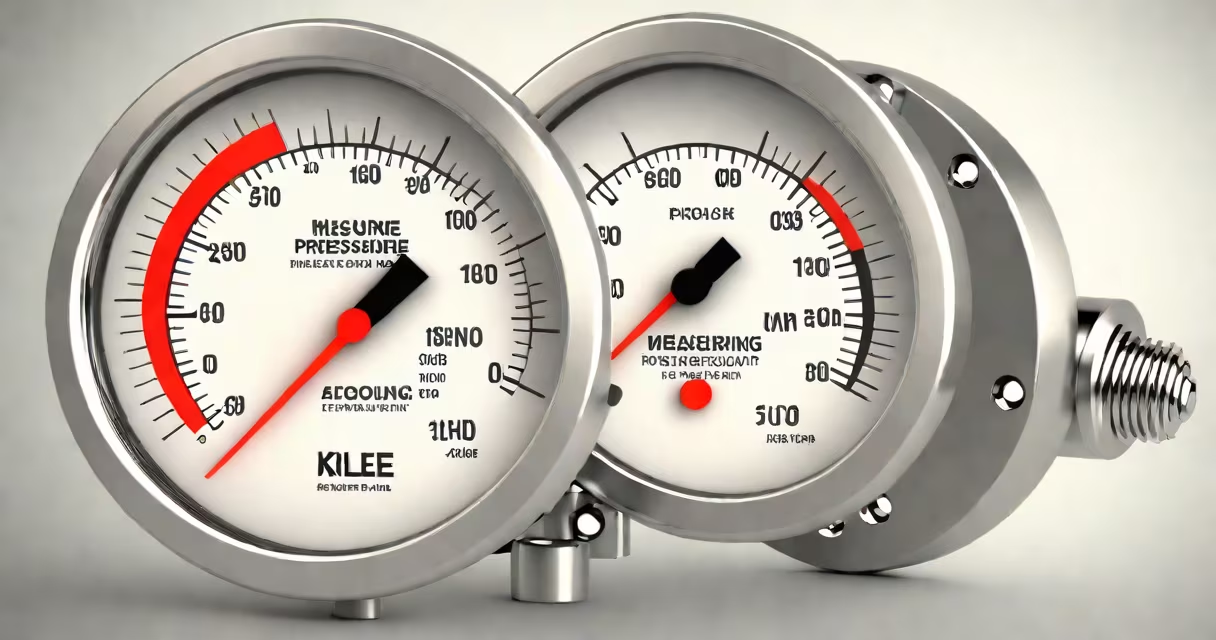
The unit for measuring pressure is the pascal (Pa), defined as one newton per square meter. It is the standard international unit used in science and engineering to quantify force applied per unit area.
Pressure results from a force distributed over a surface. The pascal measures this intensity precisely: 1 Pa = 1 N/m². This definition underpins all scientific calculations involving fluid dynamics, material stress, and atmospheric conditions.
For context, one atmosphere (atm)-the average pressure at sea level-is approximately 101,325 pascals. A tire pressure of 32 psi (pounds per square inch) equals about 220,633 Pa. These conversions show how the pascal serves as a universal reference across disciplines.
Pressure units express how much force acts on a given area. The core idea is force divided by area. For example, standing on ice with flat shoes exerts less pressure than doing so with stiletto heels-even if body weight remains constant.
Units differ based on the system of measurement. The metric system uses pascals, while imperial systems rely on pounds per square inch (psi). The choice depends on application: engineering often uses kPa (kilopascals), while automotive contexts favor psi.
One pascal represents a very small amount of pressure. A typical room air pressure is around 101,325 Pa-over 100,000 times larger than 1 Pa. This makes multiples like kilopascals (kPa), megapascals (MPa), and gigapascals (GPa) more practical for everyday use.
Several units measure pressure, each suited to specific fields. The table below outlines the most widely used ones:
| Unit | Symbol | Value in Pascals | Typical Use Case |
|---|---|---|---|
| Pascal | Pa | 1 | Scientific research, SI standard |
| Kilopascal | kPa | 1,000 | Weather reports, HVAC systems |
| Bar | bar | 100,000 | Metallurgy, diving, weather forecasting |
| Pounds per square inch | psi | 6,894.76 | Automotive tires, industrial equipment |
| Atmosphere | atm | 101,325 | Chemistry, aviation, environmental science |
Bar and atmosphere are close approximations to standard atmospheric pressure. One bar is nearly equal to one atm-differing by only 0.1%. This near-equivalence simplifies conversions between them in practice.
Engineers often use MPa (megapascals) when discussing material strength. For example, the yield strength of mild steel ranges from 200 to 300 MPa. Using pascals directly would require unwieldy numbers like 200,000,000 Pa.
Context determines which pressure unit appears in documentation or instrumentation. Medical devices typically report blood pressure in millimeters of mercury (mmHg), even though mmHg is not an SI unit. This tradition persists due to historical accuracy and clinical familiarity.
In contrast, meteorology relies on hectopascals (hPa)-equivalent to millibars-for weather maps. The U.S. National Weather Service adopted hPa in the 1990s to align with global standards. A high-pressure system may read 1025 hPa, equivalent to 102,500 Pa.
Industrial settings frequently use psi for hydraulic systems. A hydraulic press operating at 3,000 psi delivers roughly 20.7 MPa of force. Converting between psi and MPa requires multiplying by 6.89476-a value derived from the definition of pound-force and inch-square.
Many assume that "psi" is a metric unit because it's used globally. It is not. Psi belongs to the imperial system and is defined using avoirdupois pounds and inches. Confusing it with metric units leads to errors in design and safety assessments.
A common mistake is treating bar and atmosphere as interchangeable. While they're close-1 bar = 0.9869 atm-they are not identical. In precision work, such as aerospace engineering, this difference matters. A spacecraft's pressure vessel must withstand exact tolerances, not approximations.
Another error involves mixing up absolute and gauge pressure. Gauge pressure measures relative to ambient air pressure. Absolute pressure includes atmospheric pressure. For example, a tire inflated to 32 psi gauge pressure actually experiences 46.7 psi absolute (assuming 14.7 psi atmospheric pressure). Using the wrong type causes miscalculations in gas flow and combustion efficiency.
Consider a car with a tire pressure monitoring system (TPMS). The sensor measures internal pressure in psi and transmits data to the dashboard. A reading of 32 psi indicates gauge pressure-the pressure above atmospheric levels.
To convert this to pascals: 32 × 6,894.76 = 220,632.32 Pa. Rounded to three significant figures, this becomes 221 kPa. This conversion allows engineers to compare values across regions using different units.
Modern vehicles use both psi and kPa displays. European models default to kPa; American models use psi. The underlying measurement remains consistent-only the unit changes. This dual display prevents confusion during international travel.
I once designed a custom water pump system for a hydroponic farm. The manufacturer supplied specifications in psi, but our control software required input in pascals. I converted the maximum operating pressure of 120 psi to 827,371.2 Pa-over 827 kPa.
During testing, the system failed. After checking the wiring and sensors, I realized the software was interpreting the value as 827,371.2 psi-not pascals. A missing decimal point caused the error. This taught me that unit consistency isn't just about math-it's about correct interpretation in code and hardware.
The unit for measuring pressure is the pascal (Pa), the foundation of the International System of Units. While other units like bar, psi, and atm remain in use, they derive from or relate to the pascal through precise definitions.
Understanding how these units interrelate prevents costly mistakes in engineering, medicine, and daily life. Always verify whether a value is absolute or gauge, and confirm the unit system before applying it.