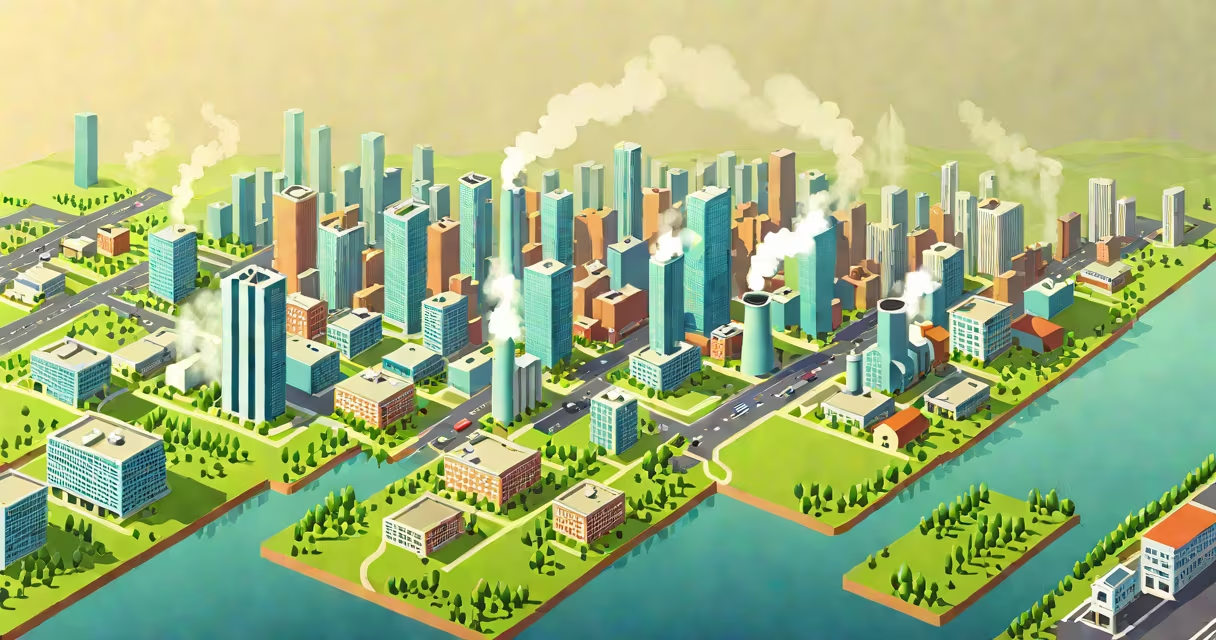
Pollution is the introduction of harmful substances into the environment that disrupt natural processes and threaten living organisms. It occurs when contaminants-chemicals, particles, or biological agents-enter air, water, or soil beyond safe levels. Pollution alters ecosystems, damages health, and degrades resources essential to life.
Contaminants enter the environment through human activity, natural events, or both. Industrial operations release toxic chemicals into rivers. Vehicles emit nitrogen oxides and particulate matter into the atmosphere. Agricultural runoff carries pesticides and fertilizers into groundwater. These inputs exceed the environment's capacity to dilute or neutralize them, leading to long-term harm.
The World Health Organization reports that 9 out of 10 people breathe air polluted beyond safety limits. The U.S. Environmental Protection Agency tracks over 1,000 hazardous pollutants under the Clean Air Act. When pollution accumulates, it triggers respiratory illness, cancer, biodiversity loss, and climate feedback loops. Understanding pollution requires identifying its form, origin, and measurable impact.
Pollution begins when a substance is released into an environmental medium-air, water, or land. Once introduced, it spreads via wind, water currents, or soil movement. Some pollutants degrade slowly; others persist for decades. They may accumulate in food chains, concentrating in top predators.
For example, mercury from coal-fired power plants enters rivers and transforms into methylmercury. Fish absorb it. Humans who eat contaminated fish develop neurological damage. This process, called biomagnification, shows how pollution moves through ecosystems. A single emission source can affect multiple species across regions.
Some pollutants undergo chemical transformation. Sulfur dioxide from factories reacts with moisture in the atmosphere to form sulfuric acid-a key component of acid rain. Acid rain corrodes buildings, kills forests, and acidifies lakes. In the Adirondack Mountains, over 50% of lakes have pH levels below 5.0 due to acid deposition since the 1960s.
Pollution is categorized by the medium it contaminates. Each type has distinct sources and health implications.
| Type | Primary Sources | Health & Environmental Impact |
|---|---|---|
| Air pollution | Vehicles, power plants, industrial emissions, wildfires | Respiratory disease, reduced visibility, global warming |
| Water pollution | Industrial discharge, sewage, agricultural runoff, oil spills | Algal blooms, fish kills, drinking water contamination |
| Soil pollution | Pesticides, heavy metals, landfill leachate, improper waste disposal | Reduced crop yields, groundwater contamination, bioaccumulation |
| Light pollution | Streetlights, advertising signs, urban development | Disrupted animal behavior, human sleep disorders |
| Thermal pollution | Power plant cooling systems, industrial heat discharge | Reduced oxygen solubility in water, fish stress |
Not all pollution is man-made. Volcanic eruptions release ash and sulfur gases. Wildfires emit black carbon and volatile organic compounds. But human activity accounts for over 80% of global pollution, according to the United Nations Environment Programme.
One overlooked form is noise pollution. Prolonged exposure to traffic or construction noise elevates cortisol levels, increasing risks for hypertension and heart disease. A 2021 study in *The Lancet Planetary Health* linked high-decibel environments to a 15% higher incidence of stroke in urban populations.
Many assume pollution only affects visible degradation-smokestacks, oily water, or dead fish. But invisible pollutants cause equal harm. Indoor air pollution from cooking stoves kills nearly 1.6 million people annually, mostly in low-income countries, according to WHO.
Another error is equating pollution with waste. Not all waste becomes pollution. Properly treated sewage doesn't pollute. But untreated effluent does. The difference lies in management, not material. A factory dumping untreated dye into a river creates pollution. The same dye, filtered and reused, remains waste but not pollution.
Also, pollution is not always regional. A plastic bottle discarded in a river in Southeast Asia can travel thousands of miles and end up in the Pacific Garbage Patch. Ocean currents carry debris across basins. Microplastics now appear in Arctic ice and human bloodstreams.
The Ganges River in India illustrates how pollution manifests across multiple media. Over 40 million people live along its banks. Cities dump raw sewage, industrial effluent, and cremation ashes directly into the river daily.
Testing by the Central Pollution Control Board in 2022 found coliform bacteria levels 1,000 times above safe limits. Heavy metals like lead and chromium were detected in concentrations exceeding WHO guidelines. Fish in the river show deformities and reduced fertility.
Despite government cleanup efforts, including the Namami Gange project, pollution persists. The river's ecological collapse threatens millions who rely on it for drinking water, irrigation, and religious practice. This case shows that pollution is not a single event-it's a continuous input of toxins across time and space.
Most people think pollution only harms the environment. But it also undermines economic stability. The World Bank estimates that pollution-related diseases cost $6 trillion annually in lost productivity and healthcare spending. That's equivalent to 6% of global GDP.
Another hidden issue: pollution's role in accelerating climate change. Black carbon from diesel engines absorbs sunlight and heats the atmosphere. Methane leaks from landfills and livestock contribute to greenhouse gas buildup. These aren't just pollutants-they're climate drivers.
I once observed a small town in rural Ohio where residents reported chronic headaches and nausea. Testing revealed elevated benzene levels in tap water. The source was an abandoned underground storage tank from a former gas station. The contamination had been undetected for over a decade. This case underscores that pollution often goes unnoticed until symptoms emerge.
Describe the pollution means to identify its form, source, and consequences using measurable evidence. It is not vague concern-it is precise analysis of contamination pathways and impacts. Whether in a city street, a farm field, or a remote forest, pollution alters conditions beyond natural tolerance.
Understanding pollution requires seeing beyond surface damage. It involves tracking chemical transformations, mapping dispersion patterns, and assessing long-term outcomes. Accurate description enables targeted solutions-regulation, remediation, prevention.