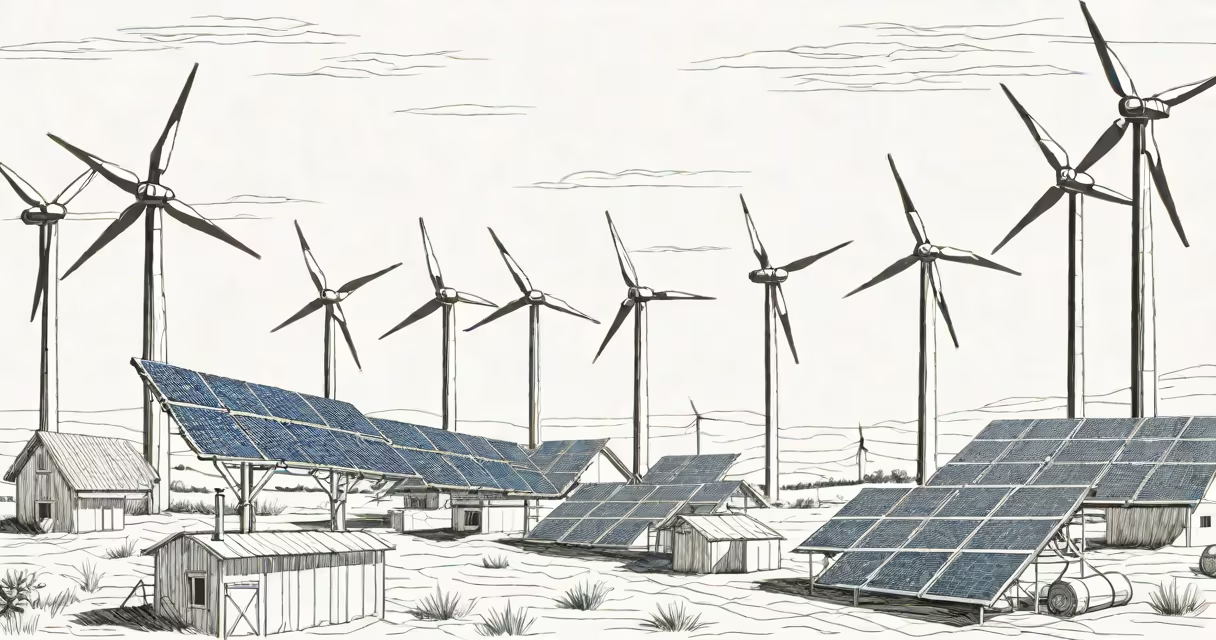
The objectives of renewable energy are strategic goals focused on replacing fossil fuels with clean, sustainable power sources to reduce greenhouse gas emissions, improve energy independence, and support long-term environmental and economic resilience.
These objectives are not theoretical-they are embedded in national policies, international agreements, and corporate sustainability plans. They define measurable outcomes such as achieving net-zero emissions by 2050, sourcing 50% of electricity from renewables by 2030, or eliminating coal-fired power plants by 2040. The core aim is to decarbonize energy systems while maintaining reliability and affordability.
International frameworks like the Paris Agreement set binding targets for countries to limit global temperature rise to below 2°C. To meet those commitments, nations adopt renewable energy objectives that align with nationally determined contributions (NDCs). For example, the European Union's Green Deal aims for climate neutrality by 2050, with renewable energy supplying 42% of final energy consumption by 2030.
Renewable energy objectives typically fall into three categories: environmental, economic, and social. Environmental goals center on emission reductions. Economic objectives emphasize job creation and reduced fuel import dependence. Social goals focus on equitable access to energy, especially in underserved regions.
Each objective is backed by metrics. The International Renewable Energy Agency (IRENA) tracks progress through indicators like installed capacity per capita, share of renewables in electricity mix, and levelized cost of electricity (LCOE). For instance, in 2023, solar PV accounted for 42% of new global power capacity additions-up from 18% in 2015-demonstrating momentum toward deployment targets.
Policy mechanisms like feed-in tariffs, renewable portfolio standards, and carbon pricing help enforce these objectives. Germany's Energiewende program, launched in 2010, set a goal of generating 65% of electricity from renewables by 2030. As of 2023, renewables supplied 52% of domestic electricity-on track to meet the target, though grid expansion remains a challenge.
Objectives vary by region and context. Some prioritize rapid deployment; others focus on integration, storage, or equity. A comparison reveals distinct approaches:
| Type | Focus Area | Example Country/Region | Target (by year) |
|---|---|---|---|
| Decarbonization | Net-zero emissions | United Kingdom | Net zero by 2050 |
| Energy Access | Universal electrification | Nigeria | 90% access by 2030 |
| Industrial Transition | Green hydrogen production | Portugal | 10 GW green hydrogen capacity by 2030 |
| Grid Resilience | Storage and smart grids | California, USA | 100% clean electricity by 2045 |
Not all objectives succeed equally. In India, the National Solar Mission aimed for 100 GW of solar capacity by 2022. The target was met in 2023-four years early-thanks to aggressive bidding and streamlined permitting. But delays in land acquisition and transmission bottlenecks slowed progress in other states.
A key insight often missed: objectives are not static. They evolve based on technological advances and political shifts. When battery costs dropped 89% between 2010 and 2022, many countries revised their storage integration targets upward. This changing adjustment ensures objectives remain feasible and relevant.
One widespread misunderstanding is that renewable energy objectives are solely about climate change. While emissions reduction is central, they also address energy security. Countries like Japan, which imports nearly 90% of its fossil fuel needs, have set renewable targets to reduce dependency on volatile global markets.
Another error is assuming all renewables are equal. Wind and solar provide variable output; hydropower and geothermal offer baseload capability. Objectives must account for this difference. Denmark's 2030 plan includes 50% offshore wind, but also mandates grid interconnections with Norway to balance supply during low-wind periods.
Some confuse objectives with outcomes. A country may set a goal to reach 30% renewable electricity by 2030-but fail to deliver if implementation lags. The World Bank reports that 40% of national renewable targets lack dedicated funding or monitoring frameworks. Without enforcement mechanisms, objectives remain aspirational.
California's objective-to achieve 100% clean electricity by 2045-is among the most ambitious in the U.S. The state began tracking progress in 2017. By 2023, 68% of electricity came from renewables and zero-carbon sources. That includes solar (26%), wind (11%), hydro (10%), and nuclear (12%).
Challenges emerged during the 2020 heatwave, when demand spiked and solar output dropped at sunset. Grid operators had to rely on natural gas peaker plants to prevent blackouts. This revealed a gap: even with high renewable penetration, system flexibility remains critical.
In response, California updated its objectives to include 10 gigawatts of battery storage by 2030 and expanded interregional transmission lines. These adjustments show that objectives are not endpoints-they are evolving benchmarks that adapt to real-world constraints.
I visited a solar microgrid project in Kitui County, Kenya, in 2022. The local government had pledged to extend electricity access to 95% of rural households by 2025. At the time, only 41% were connected. The project used decentralized solar systems powered by lithium-ion batteries.
By 2023, 67% of targeted villages had service. The objective wasn't just about power-it included training local technicians and setting up maintenance cooperatives. This dual focus on infrastructure and human capacity reflects a deeper objective: sustainable development beyond mere energy delivery.
When I spoke with a community leader, he said, "We don't just want lights. We want schools that stay open past dusk, clinics that refrigerate vaccines." That insight underscores a important point: renewable energy objectives are not just technical-they are social and developmental.
Renewable energy objectives improve. The U.S. Department of Energy's SunShot Initiative, launched in 2011, aimed to make solar energy cost-competitive with fossil fuels by 2020. The target was achieved in 2017-solar LCOE fell from $0.37/kWh in 2010 to $0.05/kWh in 2020. This success reshaped global investment patterns.
Objectives also influence finance. The Green Climate Fund allocates resources based on national renewable targets. Countries with clear, measurable objectives receive faster approval and larger grants. In contrast, vague or unstructured goals face delays or rejection.
The objectives of renewable energy are not abstract ideals. They are actionable, measurable goals designed to decarbonize energy systems, ensure long-term sustainability, and promote inclusive growth. From national pledges to community microgrids, these objectives shape policy, investment, and technology development.
Understanding them requires looking beyond headlines. Success depends on realistic timelines, adaptive planning, and cross-sector coordination. The path forward isn't just about installing more solar panels-it's about building resilient systems that serve people and planet alike.