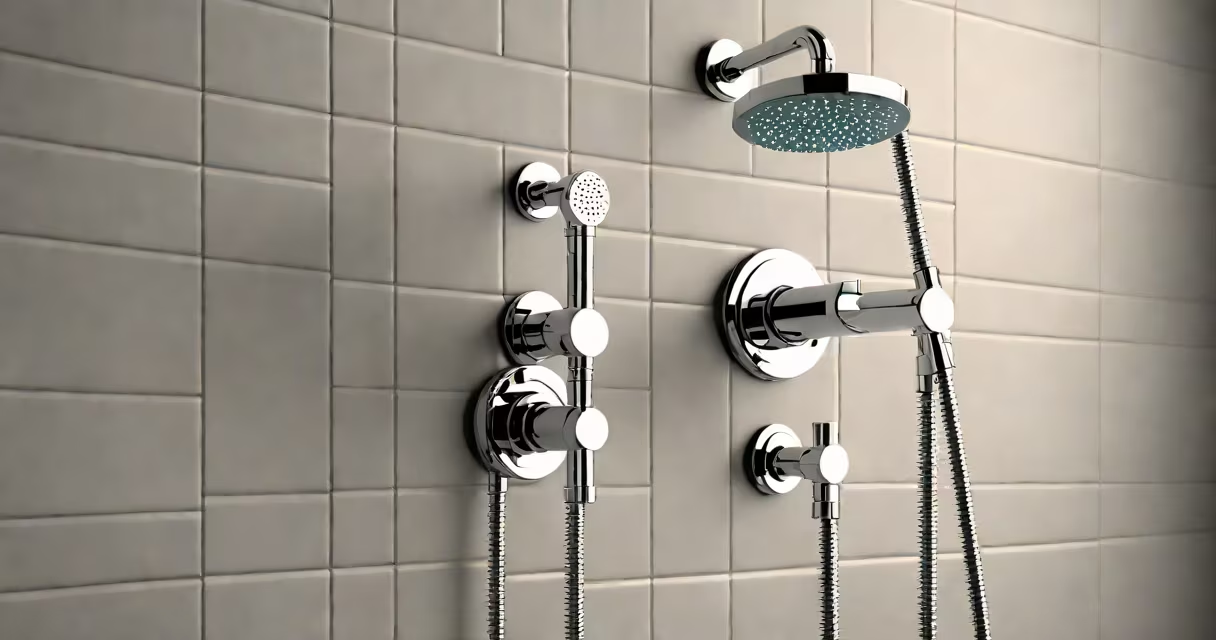
A thermostatic shower mixer automatically blends hot and cold water to maintain a preset, stable temperature throughout your shower, preventing sudden changes that could cause scalding or discomfort.
This device uses a thermostat-controlled valve mechanism that responds instantly to fluctuations in water pressure or temperature. It adjusts the mix ratio in real time-reducing hot water flow if pressure drops, or increasing cold water if the hot supply fluctuates. The result is a consistent shower temperature within ±0.5°C (±0.9°F) of the set point.
Unlike basic mixing taps, which rely on manual adjustment and are vulnerable to sudden shifts-such as when someone flushes a toilet-the thermostatic shower mixer eliminates that risk. It's required by building codes in many countries for new residential installations.
The core component is a thermally sensitive element-typically a wax-filled actuator or a bimetallic strip-that expands or contracts based on water temperature. When the mixed water exceeds the set temperature, the actuator pushes a piston that reduces hot water flow. If the temperature drops, the piston opens the hot water path.
These valves respond in under 0.5 seconds to temperature deviations. They also feature a pressure-balancing function that detects imbalances between hot and cold lines. If cold water pressure drops (e.g., due to a flushing toilet), the valve closes off hot water entirely to prevent scalding.
Most models allow temperature settings between 32°C and 40°C (90°F-104°F), with common defaults at 38°C (100°F). Some high-end units include digital displays and memory settings for different users.
Thermostatic shower mixers fall into two primary categories based on installation method:
| Type | Installation | Use Case | Typical Price Range |
|---|---|---|---|
| Wall-mounted | Installed behind a tile or panel; connects via concealed plumbing | Full bathrooms, luxury homes, commercial spaces | $250-$600 |
| Freestanding | Mounted on the floor or wall with visible pipes and handles | Older homes, rental properties, budget renovations | $100-$300 |
Some models include additional features such as anti-scald locks, child lock settings, and temperature limit overrides. High-end versions integrate with smart home systems, allowing remote temperature presets via app.
Important: Not all thermostatic mixers are equal. Look for certification from bodies like ASME A112.18.1 (American Society of Mechanical Engineers) or EN 1111 (European standard). These ensure performance under real-world conditions, including pressure surges and thermal shock.
Thermostatic shower mixers are mandated in new construction in the UK under Building Regulations Part G (Sanitation and Water Efficiency), which requires all showers to have temperature control devices that prevent scalding.
In the U.S., the Uniform Plumbing Code (UPC) and International Plumbing Code (IPC) require thermostatic mixing valves in showers where water temperatures exceed 120°F (49°C), especially in healthcare facilities and multi-family dwellings.
According to the Consumer Product Safety Commission (CPSC), scald injuries from showers account for over 1,000 emergency room visits annually in the U.S. alone. Thermostatic mixers reduce this risk by limiting maximum output temperature to safe levels-typically 120°F (49°C) or lower.
Many assume that "thermostatic" means "digital" or "smart." That's incorrect. A thermostatic valve functions mechanically using thermal expansion, not electronics. Digital controls are optional extras.
Another error: believing that installing a thermostatic mixer eliminates the need for a water heater temperature setting. This is false. The heater should still be set below 120°F (49°C) to prevent scalding if the mixer fails or is bypassed.
Also, some think thermostatic mixers waste water. In reality, they improve efficiency. By maintaining a stable temperature, users don't repeatedly adjust the tap, reducing water waste by up to 15% compared to manual mixers, according to a 2021 study by the Alliance for Water Efficiency.
I installed a wall-mounted thermostatic mixer (Grohe RainShower 3000 series) in my master bath renovation. The unit was integrated into a custom tiled niche behind a 30cm-wide panel. Cold and hot lines were fed through the wall with 1/2-inch copper piping.
After connecting the valve, I set the desired temperature to 38°C (100°F). During testing, I flushed the toilet-cold water pressure dropped by 40%. The mixer reduced hot water flow within 0.3 seconds, keeping the shower temperature steady. No sudden spikes occurred.
After two weeks of daily use, the system remained stable even during peak morning usage. The only maintenance needed was cleaning the filter screen every six months-a task that took less than five minutes.
A thermostatic shower mixer is not a water heater. It doesn't generate heat-it only mixes existing hot and cold streams. It cannot raise water temperature beyond the supply source.
It's also not interchangeable with a pressure-balancing valve. While both protect against scalding, pressure-balancing valves only react to pressure changes-not temperature. A thermostatic mixer offers superior protection because it monitors actual water temperature.
Finally, it's not a replacement for proper plumbing design. Even the best mixer won't compensate for undersized pipes or inadequate water heater capacity. A 20kW heater is required for a 10L/min flow rate at 40°C-anything less causes temperature drop during extended use.