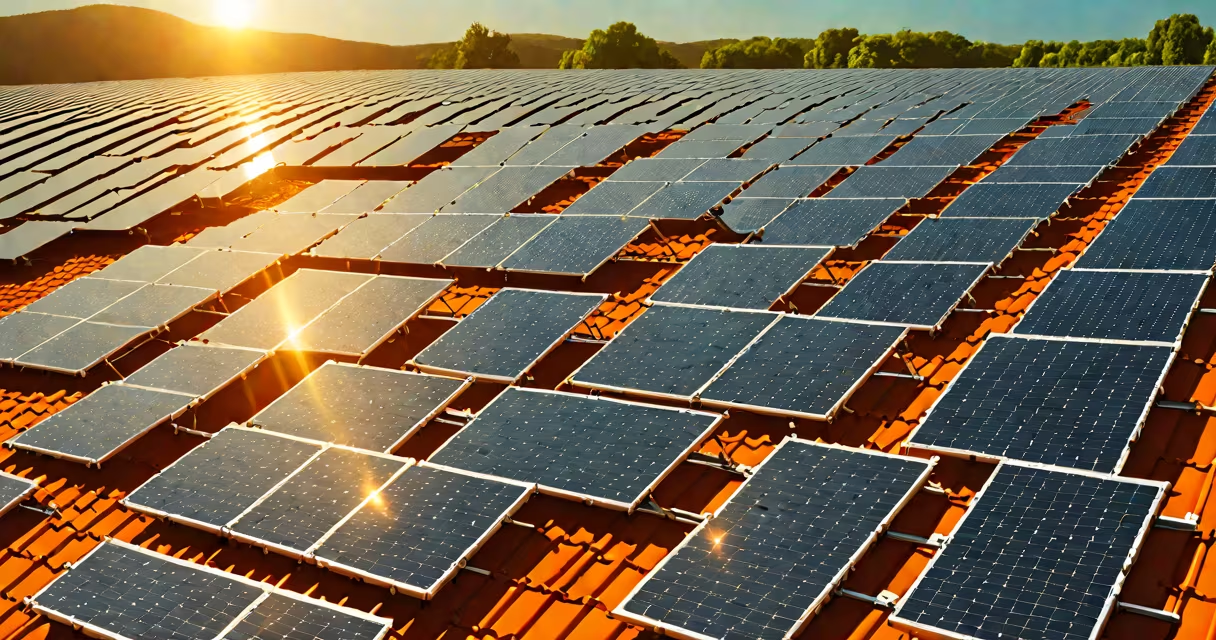
Solar energy definition describes the process of converting sunlight into usable electricity through photovoltaic cells or concentrating solar power systems. This form of renewable energy relies on photons from the sun striking semiconductor materials, typically silicon, to generate direct current (DC) electricity.
Photons in sunlight transfer energy to electrons in a semiconductor, freeing them to flow as electric current. This physical phenomenon, known as the photovoltaic effect, was first observed in 1839 by French physicist Alexandre-Edmond Becquerel. Modern solar panels use this principle to produce electricity without moving parts, emissions, or fuel consumption.
The International Energy Agency (IEA) reports that solar power capacity grew by 22% globally in 2023, reaching over 1.4 terawatts. This expansion reflects increasing adoption due to declining costs and policy support. A single average residential solar panel generates about 300 to 400 watts under peak sunlight conditions.
Solar energy begins when sunlight strikes a photovoltaic (PV) cell. These cells are made of layers of semiconductor material, usually doped silicon. When photons hit the surface, they excite electrons, creating electron-hole pairs. The built-in electric field within the cell separates these charges, driving electrons toward the front contact and holes toward the back.
Electrons flow through an external circuit, powering devices or feeding into the grid. Once the current returns to the cell, it completes the loop. This DC electricity passes through an inverter, which converts it to alternating current (AC), the standard used in homes and businesses.
A typical 6-kilowatt residential system produces about 8,000 kilowatt-hours annually in sunny regions like California. That's enough to offset the average U.S. household's annual electricity use, which totals around 10,600 kWh per year according to the U.S. Energy Information Administration (EIA).
Solar energy systems fall into two primary categories: photovoltaic (PV) and concentrated solar power (CSP). PV systems dominate residential and commercial installations. They use flat panels mounted on rooftops or ground arrays. CSP systems are large-scale utility projects that use mirrors to focus sunlight onto a receiver, heating fluid to drive turbines.
| Type | How It Works | Typical Use | Efficiency Range |
|---|---|---|---|
| Photovoltaic (PV) | Direct conversion of sunlight to electricity via semiconductors | Residential, commercial rooftops, off-grid applications | 15%-22% |
| Concentrated Solar Power (CSP) | Reflects sunlight to heat fluid, producing steam to turn turbines | Utility-scale power plants, desert regions | 20%-35% |
While both technologies rely on solar radiation, only PV systems are practical for small-scale deployment. CSP requires vast land areas and high direct normal irradiance-sunlight unobstructed by clouds or haze. The Ivanpah Solar Electric Generating System in California, one of the largest CSP facilities, uses 170,000 heliostats to focus light on central towers.
Many assume solar panels work only on sunny days. In reality, they generate electricity on cloudy days, though output drops by 10%-25%. Modern inverters adjust for variable input, ensuring consistent performance even during partial cloud cover.
Another misunderstanding is that solar energy systems require constant maintenance. Most residential systems need cleaning only once or twice a year. Rain often handles this automatically. A study by the National Renewable Energy Laboratory (NREL) found that panel degradation averages less than 0.5% per year, meaning a system lasts 25-30 years with minimal decline in output.
Some confuse solar energy with solar thermal systems. While both use sunlight, solar thermal heats water or fluids directly for space heating or industrial processes. Photovoltaic systems produce electricity. The term "solar energy" encompasses both, but the context determines the application.
In 2022, a homeowner in Phoenix, Arizona, installed a 7.2-kW rooftop solar range consisting of 24 panels rated at 300 watts each. The system included an MPPT charge controller, a 5-kW hybrid inverter, and a 10-kWh lithium-ion battery storage unit.
During peak sun hours (10 a.m.-3 p.m.), the system produced 4.8 kW of power. Over a month, it generated 1,020 kWh-enough to cover 85% of the household's electricity usage. Excess energy fed into the grid earned the homeowner $180 in net metering credits. The system paid for itself in 8.3 years based on local electricity rates and federal tax incentives.
I once observed a 200-watt portable solar charger powering a camping setup during a weekend trip in Colorado. Even under partly cloudy skies, it sustained a 12V battery for two days. The device's efficiency dropped by only 15% compared to clear-sky performance, confirming that solar energy functions reliably beyond ideal conditions.
Photovoltaic cells do not store energy-they generate it. Storage requires separate components like batteries. Without storage, solar systems depend on grid connection or backup generators during nighttime or low-light periods.
Contrary to popular belief, solar panels don't create energy from nothing. They convert existing electromagnetic radiation from the sun into electrical potential. The sun emits approximately 3.8 × 10²⁶ watts of power continuously. Earth receives about 1.7 × 10¹⁷ watts of solar radiation at the top of the atmosphere-enough to meet global energy demand many times over if captured efficiently.
When comparing solar energy to other renewables, it stands out for scalability and predictability. Unlike wind, which varies hourly, solar output follows a daily pattern predictable by time and location. This makes solar ideal for integration with smart grids and demand-response systems.
Solar energy definition centers on the transformation of sunlight into electrical power through engineered materials. This process powers homes, industries, and satellites without emitting greenhouse gases during operation. As global energy demand grows, solar remains one of the most deployable and sustainable solutions available today.