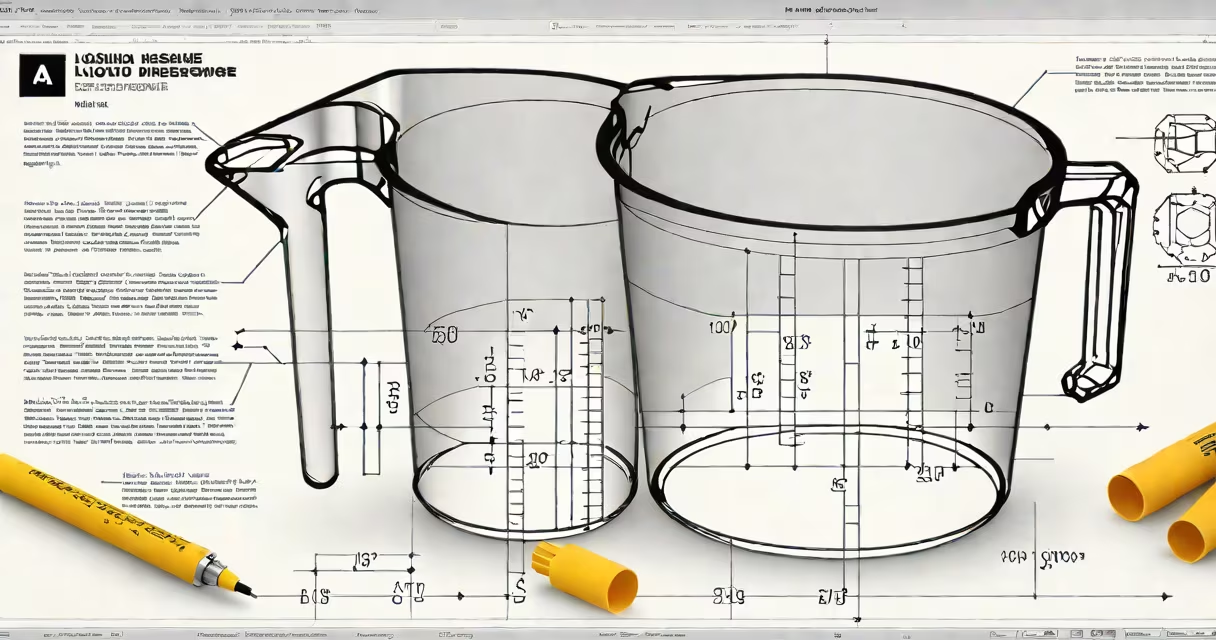
A liquid measure is a standardized unit used to quantify the volume of fluids, such as water, milk, or oil, typically in U.S. customary or metric systems. It measures capacity, not weight, and applies specifically to substances that flow freely.
Liquid measure uses distinct units based on regional standards. The U.S. customary system includes fluid ounces, cups, pints, quarts, and gallons. The metric system uses milliliters and liters. One U.S. gallon equals 128 fluid ounces, while one liter equals 1,000 milliliters. These units are calibrated to ensure consistency across recipes, medical dosages, and industrial processes.
Unlike dry measure-which applies to solids like flour or sugar-liquid measure accounts for the way liquids fill containers. A dry quart is larger than a liquid quart. Confusing the two leads to errors in baking, chemistry, and pharmaceutical production. For example, a recipe calling for 1 cup of milk requires a liquid measure, not a dry measuring cup.
Measuring tools designed for liquids have markings on their sides to indicate volume. Graduated cylinders, beakers, and measuring cups are common examples. These tools are calibrated to account for meniscus-the curved surface of a liquid in a container. To read accurately, eyes must align with the bottom of the meniscus at room temperature.
Temperature affects liquid volume. Water expands slightly when heated, so a 1-liter bottle filled at 20°C holds less actual volume at 80°C. This is why laboratory protocols specify "measured at 20°C" when precision matters. Industrial settings often adjust for thermal expansion using correction factors.
In kitchens, liquid measures are practical. A standard U.S. measuring cup holds 8 fluid ounces (236.6 mL) and is marked in 1/4-cup increments. Recipes rely on this uniformity. If a recipe calls for 1/2 cup of olive oil, using a liquid measure ensures consistent results across different users.
Two primary systems define liquid measure: U.S. customary and metric. The U.S. system uses fluid ounces, cups, pints, quarts, and gallons. The metric system uses milliliters and liters. Both are decimal-based except for U.S. customary units, which use fractions.
| Unit | U.S. Customary | Metric Equivalent |
|---|---|---|
| 1 fluid ounce | 1 fl oz | 29.57 mL |
| 1 cup | 8 fl oz | 236.6 mL |
| 1 pint | 16 fl oz | 473.2 mL |
| 1 quart | 32 fl oz | 946.4 mL |
| 1 gallon | 128 fl oz | 3.785 L |
The metric system is simpler due to base-10 scaling. One liter equals 1,000 milliliters. Conversions are straightforward: multiply by 10 to go from deciliters to milliliters. The U.S. system requires memorizing ratios-e.g., 4 cups = 1 quart-making it harder to scale quickly.
Some countries use hybrid systems. Canada officially uses metric but retains imperial units in informal contexts. A 1-liter bottle of soda may be labeled as "33.8 fluid ounces" alongside "1 L." This dual labeling reflects ongoing cultural adaptation rather than technical necessity.
Cooking relies heavily on liquid measure. A cake recipe requiring 1 cup of buttermilk must use a liquid measuring cup. Using a dry cup can result in too much or too little liquid, altering texture and rise. Baking is sensitive to volume ratios-too much liquid makes batter thin and flat.
Medical settings depend on precise liquid measure. Intravenous fluids are administered in milliliters per hour. A doctor might prescribe 50 mL of saline solution every 4 hours. Errors in dosage can cause harm. The Institute for Safe Medication Practices reports that misinterpretation of "mL" vs. "mg" causes 10% of medication errors in hospitals.
Industrial applications demand accuracy. Fuel delivery trucks use calibrated tanks measured in gallons. A truck carrying 10,000 gallons of diesel must deliver exactly that amount. Overfilling or underfilling affects profit margins and compliance with environmental regulations. The U.S. Department of Transportation mandates calibration checks every 6 months for fuel transport vehicles.
Liquid measure is not interchangeable with dry measure. Dry measure uses units like pounds, bushels, or cubic feet. A dry pint is 18.6 cubic inches, while a liquid pint is 28.85 cubic inches. The difference arises because dry goods settle and compress differently than liquids.
It is also not the same as weight. A pound of water weighs 16 ounces, but a pint of water weighs approximately 1.04 pounds. Volume and mass differ. A liter of water weighs about 1 kilogram at 4°C, but this changes with temperature and purity. Using weight instead of volume introduces error unless corrected for density.
One non-obvious distinction: liquid measure assumes standard atmospheric pressure. At high altitudes, boiling points drop, affecting volume readings. For example, at 5,000 feet elevation, water boils at 95°C instead of 100°C. This alters evaporation rates during cooking, meaning a recipe adjusted for sea level may fail at altitude. The National Institute of Standards and Technology (NIST) provides correction tables for altitude-based volume adjustments in scientific work.
I once baked a batch of chocolate chip cookies using a dry measuring cup for 1 cup of milk. The dough was sticky and spread too thin. The cookies burned on the edges and were dense in the center. After switching to a liquid measuring cup with clear markings, the texture improved dramatically. The lesson: even small volume differences affect outcomes.
Another time, I measured 100 mL of vinegar for a marinade using a kitchen scale. I assumed 100 grams equaled 100 mL. But vinegar is denser than water-its specific gravity is 1.01. So 100 mL weighed 101 grams. The marinade was too acidic. I learned that volume and mass aren't equivalent across liquids.